How Much Grass Seed Do I Need?
Seeding Rates for Overseeding, New Lawns & Renovations
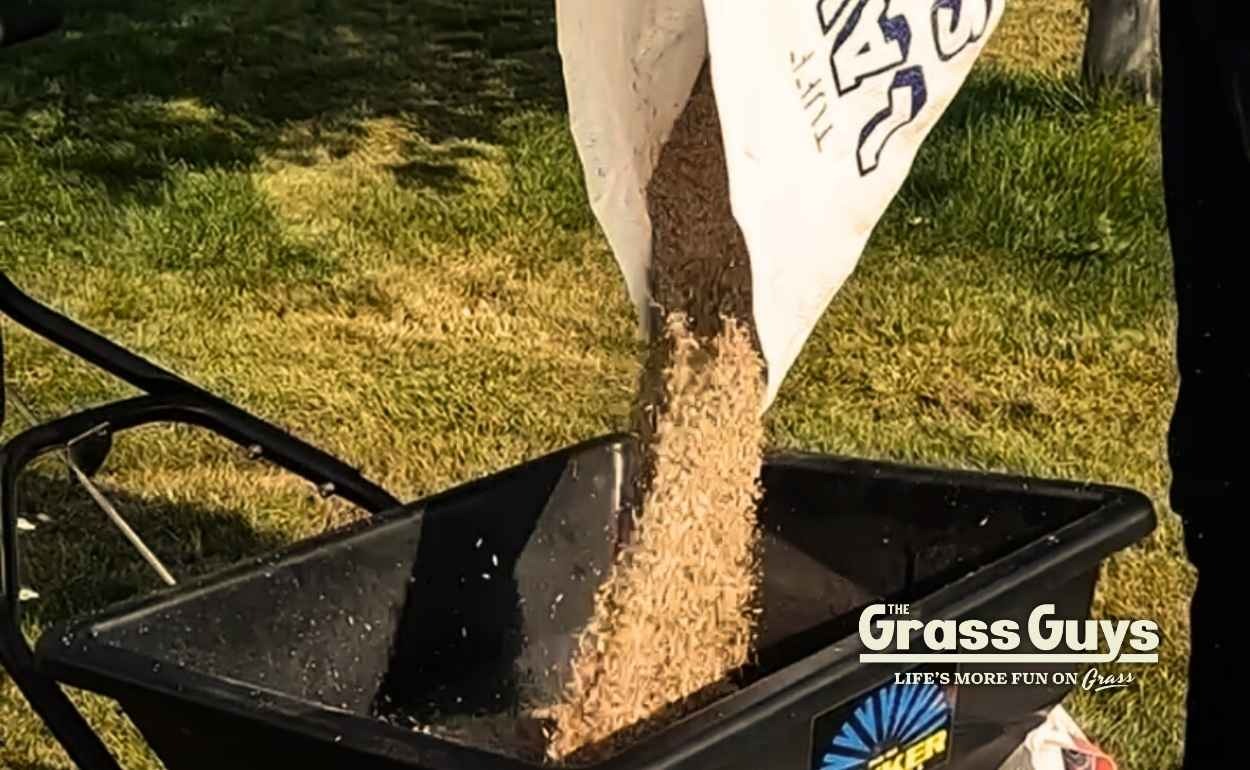
Using the right amount of grass seed is one of the most overlooked parts of lawn success.
Too little seed?
- Thin turf
- Weed pressure
- Patchy results
Too much seed?
- Crowding
- Weak root development
- Wasted money
Let’s simplify this.
Step 1: Measure Your Lawn Size

You need square footage.
Simple Formula:
Length × Width = Square Feet
Example:
50 ft × 40 ft = 2,000 sq ft
For irregular shapes:
Break your lawn into rectangles and add them together.
Step 2: Choose Your Seeding Scenario
The amount of seed changes depending on what you're doing.
Overseeding (Seeding over an existing lawn)

You’re adding seed into an existing lawn to increase density.
Recommended rate (general):
- 3–7 lbs per 1,000 sq ft
Use the lower end if:
- Lawn already has decent density
Use the higher end if:
- Lawn is thin
- You want a noticeable upgrade
- You’re introducing a new grass type
For exact rates per grass type, download our free guide “What Grass is Best for Me?” for seeding rates and personalized seed recommendations for you.
New Lawn / Full Renovation
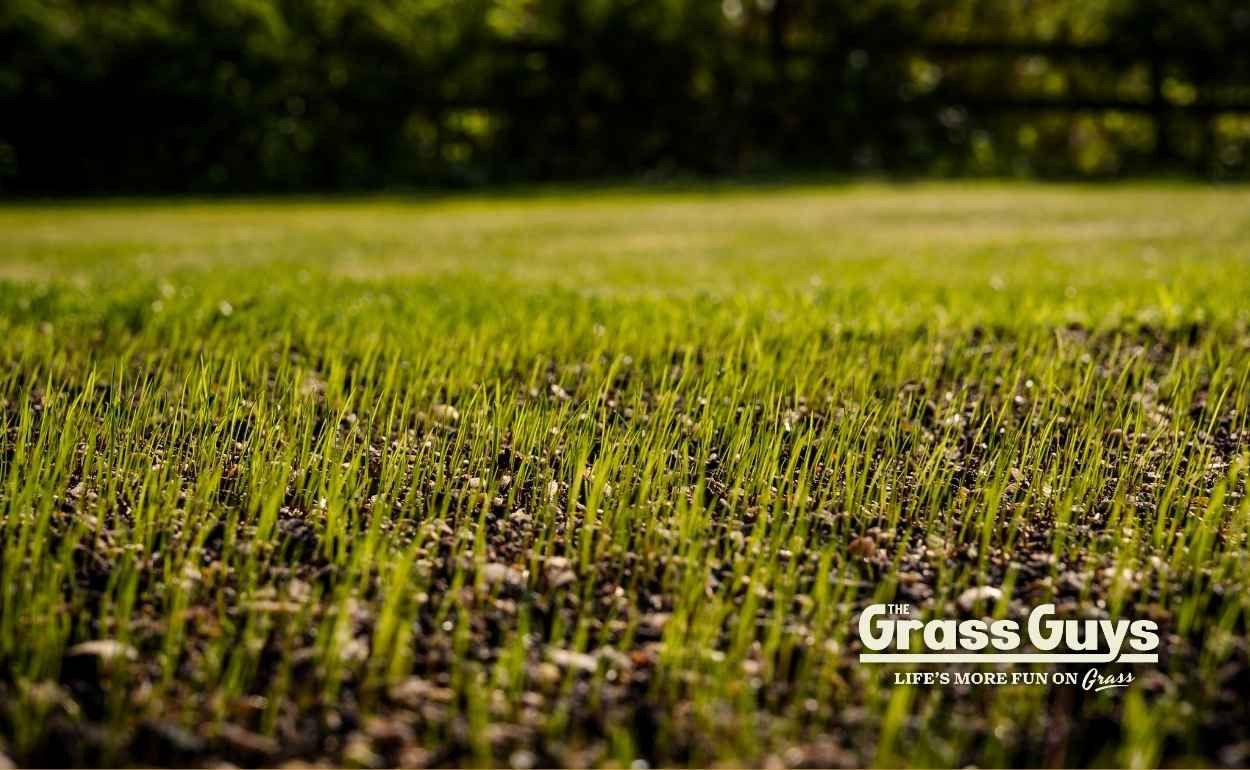
You’re starting from bare soil.
Recommended rate:
- 6–12 lbs per 1,000 sq ft
Lower end:
- Larger-seeded grasses (tall fescue)
Higher end:
- Smaller-seeded grasses (bluegrass)
- Premium dense finishes
For exact rates per grass type, download our free guide “What Grass is Best for Me?” for seeding rates and personalized seed recommendations for you.
Step 3: Understand Grass Type Differences
Not all seed weigh the same.
Tall Fescue
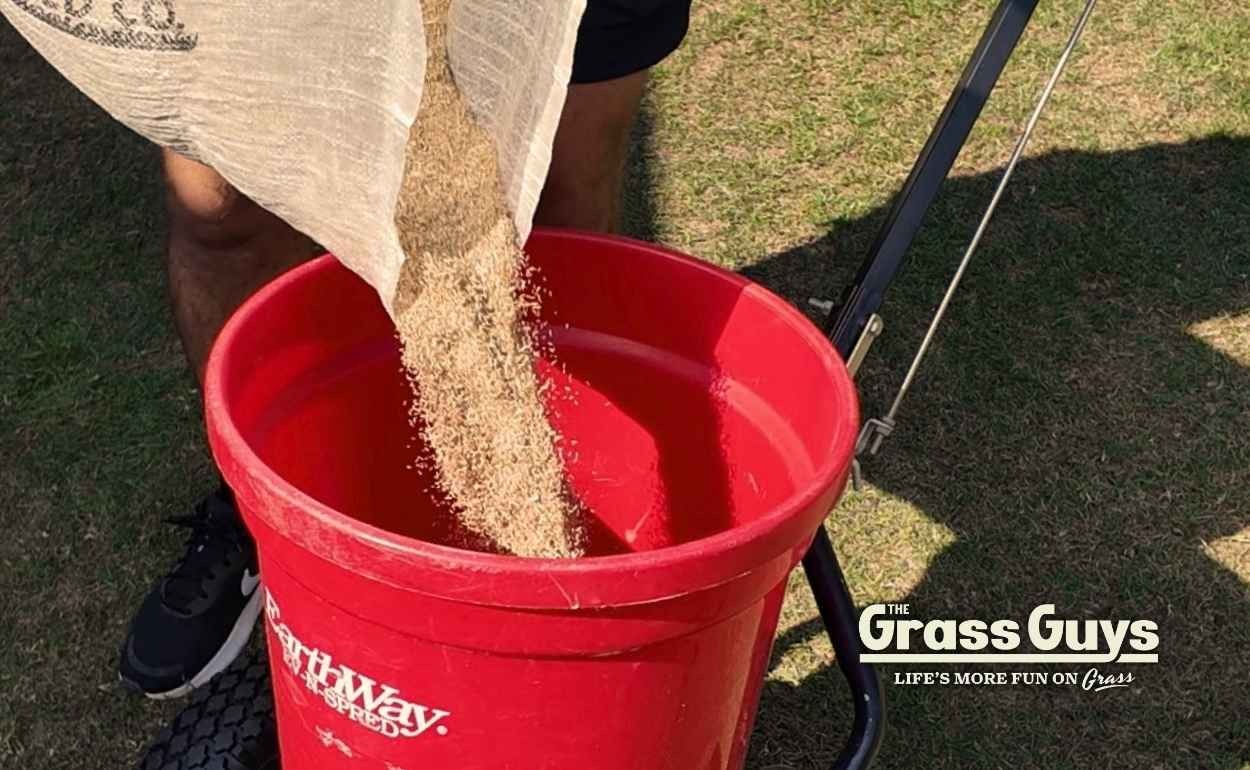
- Larger seed
- Typically 8–12 lbs for new lawns
Kentucky Bluegrass
- Very small seed
- Higher rate needed
- Typically 2–3 lbs overseeding
- 6–8+ lbs new lawn
Perennial Ryegrass
- Fast germinating
- Mid-range rate
Step 4: Check if Seed is Coated
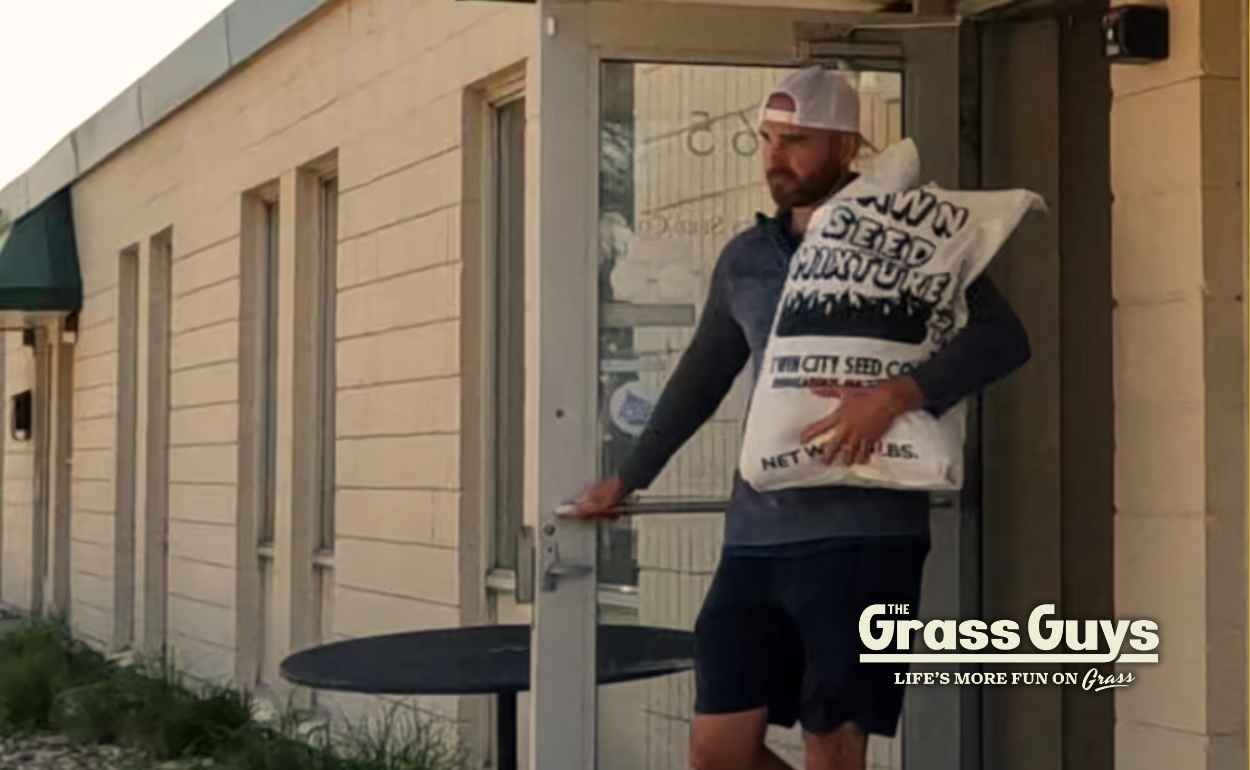
This matters more than people realize and will dramatically change the amount of product you need.
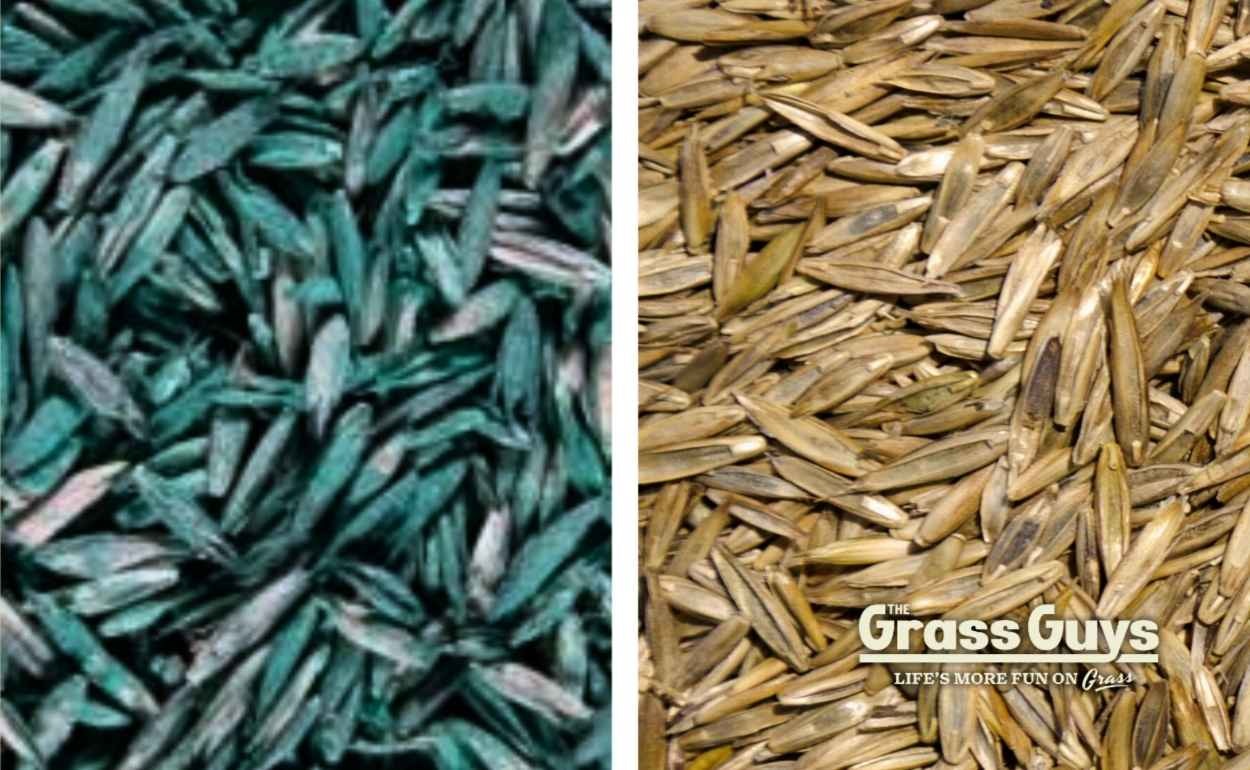
If your bag says:
- 25–50% coating
- “Includes fertilizer coating”
- “Moisture absorbing technology”
That means part of the weight isn’t seed (and honestly, probably not the best seed to be using).
A 50 lb bag might only contain 30–35 lbs of actual seed. So you may need to apply more total weight to hit the correct rate.
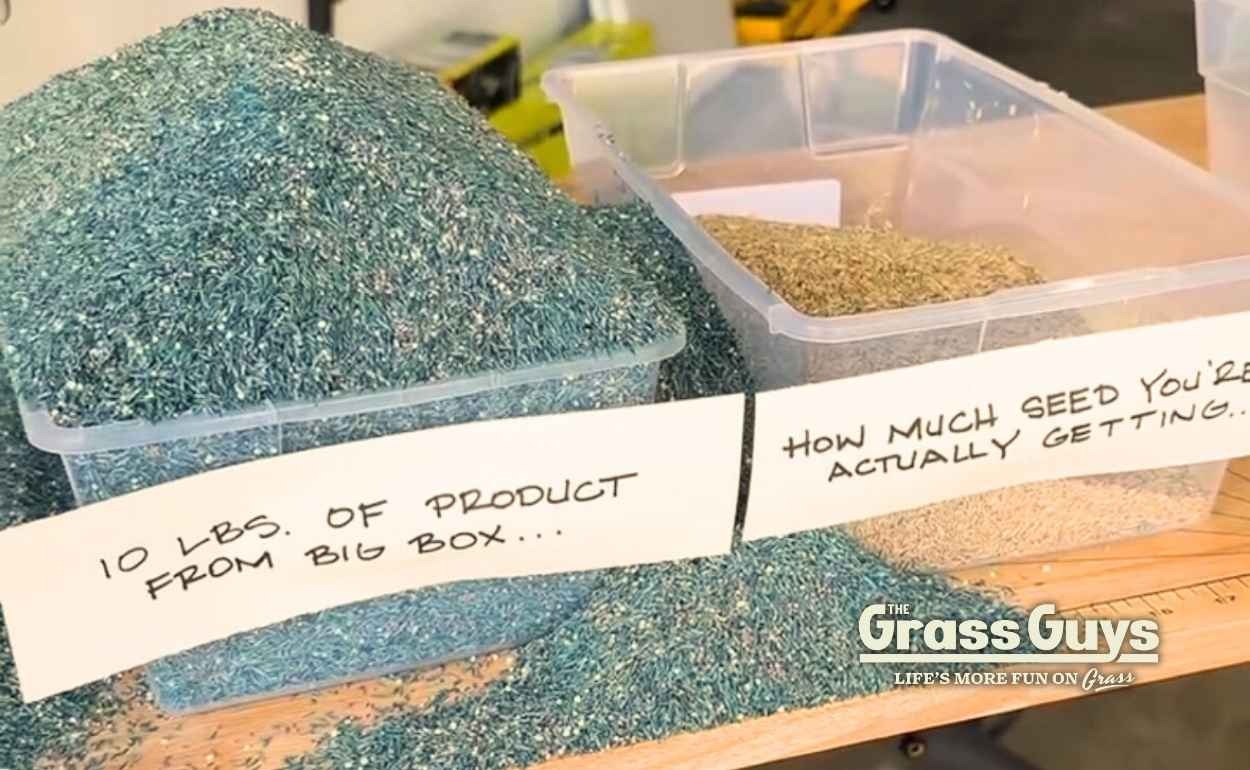
Seriously, if you haven’t taken the time to learn the difference between coated and non-coated seed yet, read this article below right now.
You’ll thank us later…
👉 See: Coated vs Non-Coated Grass Seed
Simple Seed Calculation Example
Let’s say:
You have 5,000 sq ft
You’re overseeding
Recommended rate = 4 lbs per 1,000 sq ft
Calculation:
5 × 4 = 20 lbs of seed
That’s it.
Common Mistakes With Seeding Rates
Avoid these:
- Guessing coverage
- Assuming a 50 lb bag covers 10,000 sq ft
- Ignoring coating percentage
- Overseeding too lightly
- Overseeding way too heavy
More seed does NOT mean better lawn.
Proper density matters.
What Happens If You Use Too Much Seed?
It sounds counterintuitive, but overseeding too heavy can cause:
- Seedling competition
- Shallow root systems
- Thin, weak turf
- Increased disease risk
More is not better.
Right is better.
What Happens If You Use Too Little?
- Bare patches remain
- Weeds fill gaps
- Thin appearance
- Slower transformation
Proper rate accelerates density.
When to Seed (Timing Matters)
Even perfect seeding rates fail if timing is wrong.
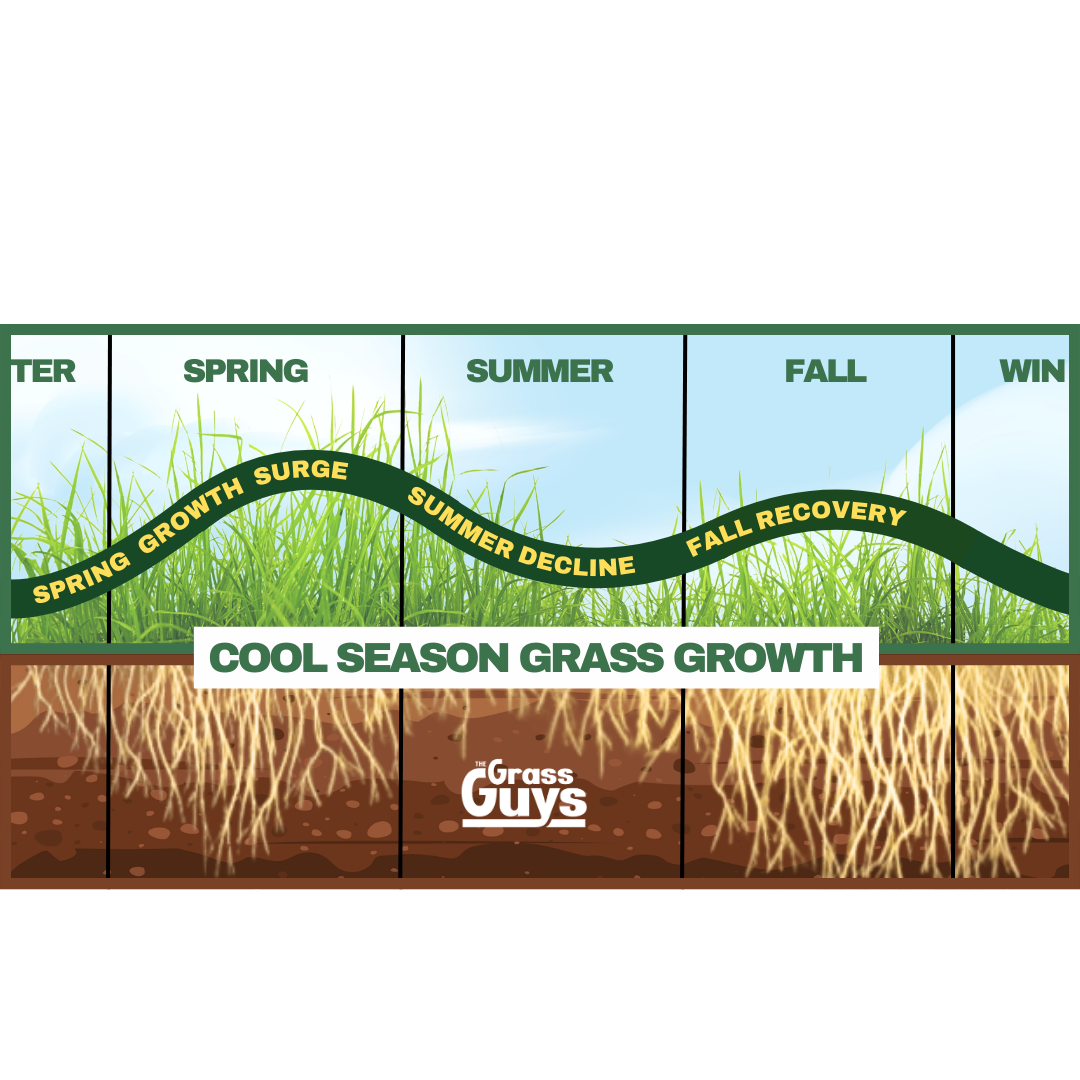
For cool-season lawns:
Best Time: Early Fall
Second Best: Spring
👉 See: Cool-Season Lawn Calendar
👉 See: How to Overseed Properly
Not Sure What Grass Type to Use?
Your seed rate depends on what you're planting.
If you're unsure whether to use:
- Tall fescue
- Kentucky bluegrass
- A blend
- A drought-tolerant option
- A shade mix
Download our free guide: 👉 What Grass is Best for Me?

It includes:
- Our recommended seed blends
- Shade vs sun picks
- Traffic vs drought breakdown
- Beginner vs premium options
Plus seasonal reminders so you don’t miss your window.
Recommended Seed Options
1. Best All-Around Renovation Blend
Resilience II Turf-Type Tall Fescue Mix
- Top-rated NTEP performance: Scores of 6.6+ in turf quality, color, and traffic tolerance
- Rhizomatous tall fescue: Spreads laterally via rhizomes and tillering for a dense, self-repairing turf
- Drought & shade resistant: Outperforms Kentucky bluegrass in tough conditions
- Exceptional purity: Among the cleanest, most weed-free seed on the market
- Adapted to cool-season and transition zones: Ideal for climates in the Midwest, Northeast, Pacific Northwest, and upper South

2. Premium Look Renovation
Blue Resilience Turf-Type Tall Fescue & Kentucky Bluegrass Mix
- Elite tall fescue + Kentucky bluegrass combo for resilience and beauty
- Rhizomatous tall fescues for lateral spread and self-repair
- Blue Gem bluegrass improves winter survival and color retention
- Superior drought & traffic tolerance for active family lawns
- Thrives in full sun to moderate shade across diverse soil types
- Perfect for high-use areas like neighborhood play zones, dog yards, and front lawns
3. TWCA Certified Drought Tolerant Blend
Tuff Turf Lawn Seed Mix (TWCA Certified to use up to 40% Less Water)
- Combination of improved turf-type tall fescues with perennial ryegrass and Kentucky bluegrass.
- Excellent drought tolerance, wear tolerance, and will perform nicely in a variety of soil conditions.
- Adapts to full sun to reasonably heavy shade conditions.
- Best used where budgets dictate that input levels are low and in fact low levels of input are preferred.
- Proudly approved by the Turfgrass Water Conservation Alliance.
Final Thoughts
Seeding success isn’t about dumping more seed.
It’s about:
- Measuring correctly
- Matching the right rate
- Choosing quality genetics
- Watering consistently
Get the rate right.
Then focus on execution.
Your lawn will separate itself.