How to Calculate How Much Fertilizer to Apply
Granular and Liquid Formulas Explained for Cool-Season Lawns
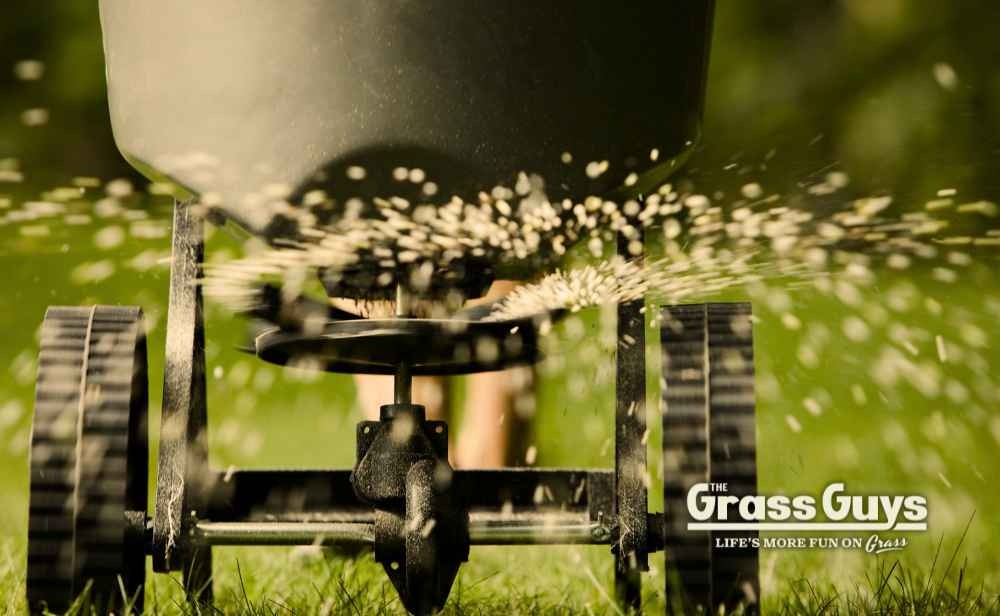
Most fertilizer mistakes happen for one reason. Homeowners apply fertilizer based on the bag weight instead of the nitrogen rate.
Lawn fertilizer is measured in pounds of nitrogen per 1,000 square feet.
Once you understand that, fertilizer becomes simple math instead of guesswork.
This guide will show you:
- How much nitrogen a cool-season lawn typically needs per year
- How to calculate granular fertilizer rates
- How to calculate liquid fertilizer rates
- Real world examples
- Where soil testing fits into the equation
Step 1: Know How Much Nitrogen Your Lawn Needs Per Year
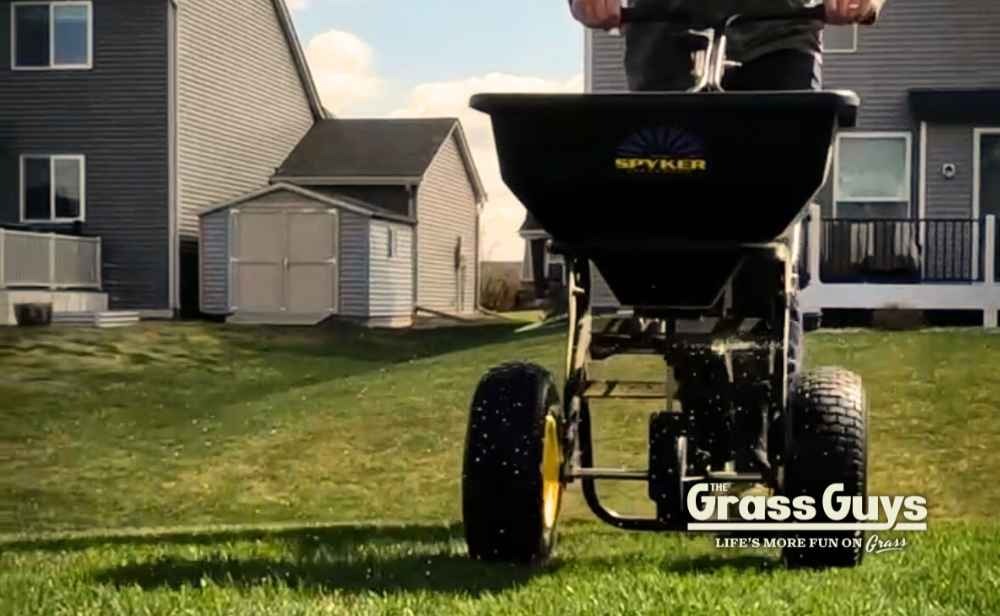
For most cool-season lawns, a common annual nitrogen range is:
2 to 4 pounds of nitrogen per 1,000 square feet per year.
Lower end, 2 pounds:
- Lower maintenance lawns
- Fine fescue
- Shadier lawns
Middle range, 3 pounds:
- Typical homeowner lawn
- Balanced maintenance
Higher end, 4 pounds:
- High-performance lawns
- Heavy traffic
- Premium appearance goals
This total should be split across multiple applications throughout the year.
Step 2: Understand What the NPK Numbers Mean
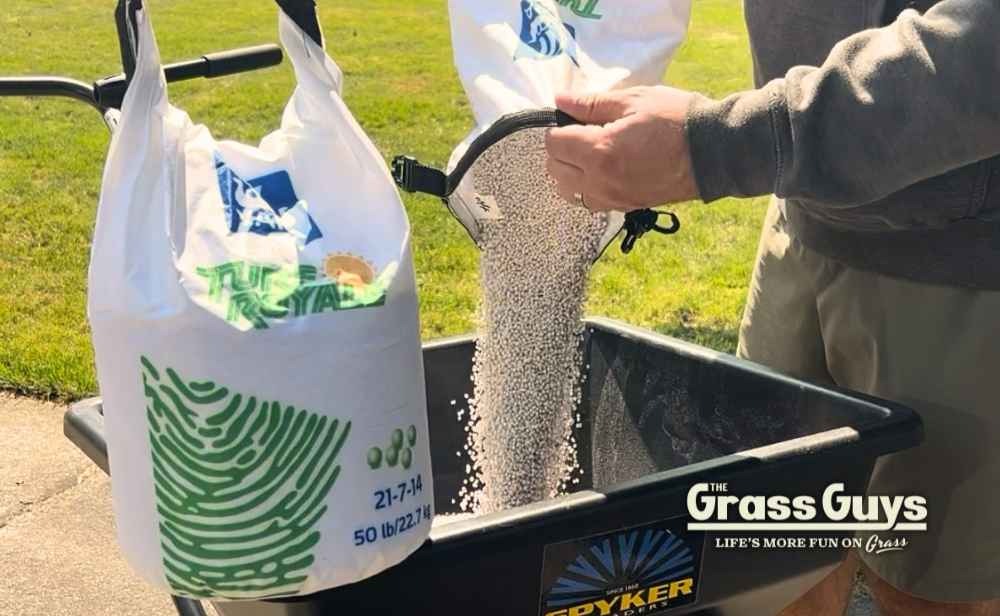
Example fertilizer: 24-0-10
The first number, 24, means:
- 24 percent of the bag is nitrogen.
If the bag weighs 50 pounds:
- 50 × 0.24 = 12 pounds of nitrogen in the bag.
You are not applying 50 pounds of nitrogen.
You are applying a percentage of it.
👉 See: What Do NPK Numbers Mean?
Granular Fertilizer Calculation Formula
To apply 1 pound of nitrogen per 1,000 square feet:
Use this formula:
1 ÷ (Nitrogen percentage as a decimal) = pounds of product needed per 1,000 square feet
Let’s break that down.
Example 1: 24-0-10 Fertilizer
24 percent nitrogen.
Convert 24 percent to decimal:
- 0.24
Now calculate:
- 1 ÷ 0.24 = 4.16 pounds
You would apply approximately 4.2 pounds of that fertilizer per 1,000 square feet to deliver 1 pound of nitrogen.
Example 2: 32-0-4 Fertilizer
32 percent nitrogen.
Convert to decimal:
- 0.32
- 1 ÷ 0.32 = 3.12 pounds
You would apply about 3.1 pounds per 1,000 square feet for 1 pound of nitrogen.
Higher nitrogen percentage means less product required.
Real World Annual Example

Let’s say:
- Your lawn is 5,000 square feet.
- You want to apply 3 pounds of nitrogen per 1,000 square feet per year.
First calculate total nitrogen needed:
- 5,000 ÷ 1,000 = 5 units
- 5 units × 3 pounds per 1,000 square feet = 15 total pounds of nitrogen per year
If using a 24-0-10 fertilizer:
- Each 50 pound bag contains 12 pounds of nitrogen.
You would need:
- 15 ÷ 12 = 1.25 bags per year
Now break it down per application.
Breaking It Down Per Application
If targeting 3 pounds per year, you might apply:
- Spring: 0.75 pounds
- Early fall: 1 pound
- Late fall: 1.25 pounds
Using 24-0-10. For 0.75 pounds nitrogen:
- 0.75 ÷ 0.24 = 3.1 pounds of product per 1,000 square feet
- Multiply by lawn size to get total product needed.
This keeps growth steady without overloading at one time.
Liquid Fertilizer Calculations
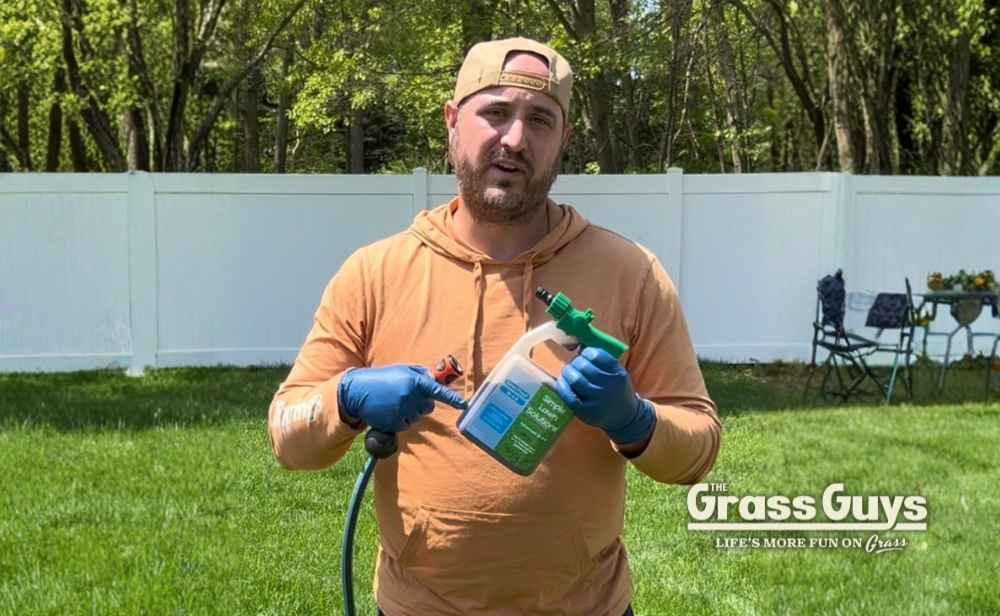
Liquid fertilizers still follow nitrogen percentage math.
Example: 18-0-1 liquid fertilizer.
- 18 percent nitrogen.
If label says:
- Apply 3 ounces per 1,000 square feet.
First determine nitrogen content.
If the product weighs approximately 10 pounds per gallon and contains 18 percent nitrogen:
- One gallon contains 1.8 pounds of nitrogen.
You must check product label weight per gallon for exact math.
Simplified Liquid Example
If label states:
- Apply 6 ounces per 1,000 square feet and that delivers 0.1 pounds of nitrogen.
To apply 1 pound of nitrogen:
- You would need 10 applications of that rate.
- Liquid applications are typically smaller and more frequent.
Granular applications are typically larger and less frequent.
Important: Do Not Exceed 1 Pound of Nitrogen Per Application
For cool-season lawns:
Avoid exceeding 1 pound of nitrogen per 1,000 square feet in a single application.
Heavy nitrogen at once can:
- Increase burn risk
- Encourage disease
- Create excessive growth
Slow release products allow slightly more flexibility, but moderation wins.
Where Soil Testing Comes In
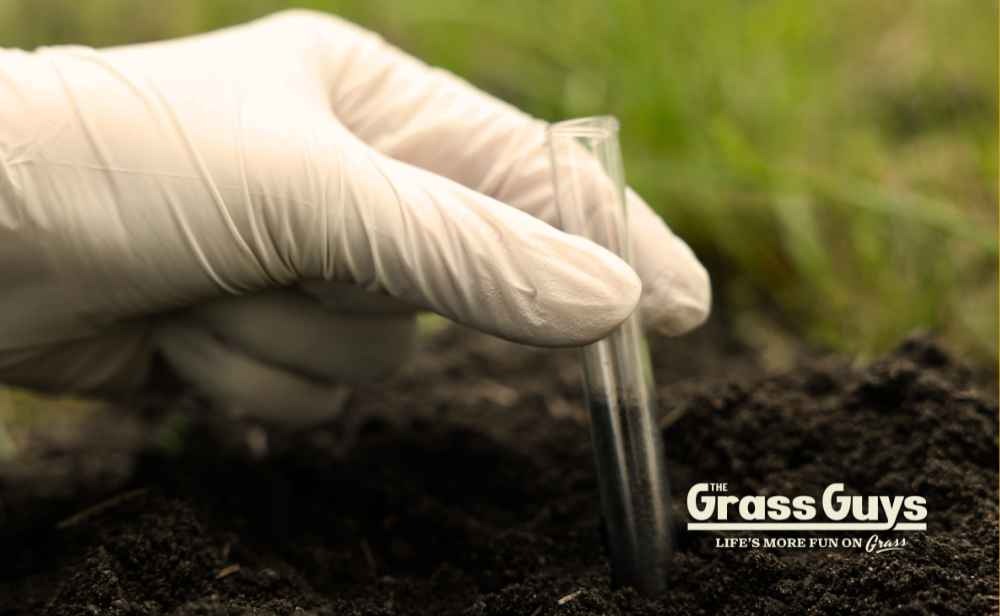
Before blindly targeting 3 to 4 pounds per year, test your soil.
A soil test reveals:
- Existing nutrient levels
- pH balance
- Organic matter content
- Phosphorus and potassium needs
If your soil already has adequate phosphorus, you do not need starter fertilizer.
If potassium is deficient, you may adjust product choice.
Soil testing removes guesswork.
👉 See: Soil Testing Guide
Adjusting Nitrogen Based on Lawn Type
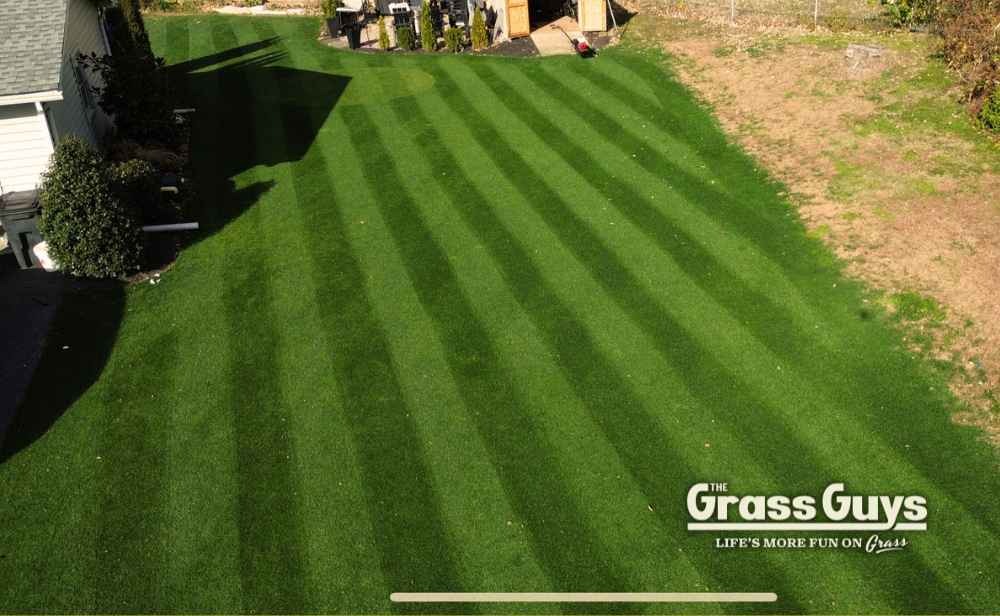
Tall Fescue lawns:
- 2 to 3 pounds per year is often sufficient.
Kentucky Bluegrass lawns:
- 3 to 4 pounds per year supports density.
Perennial Ryegrass lawns:
- 3 to 4 pounds per year supports growth.
Fine Fescue lawns:
- 1.5 to 2.5 pounds per year may be adequate.
Grass type influences nitrogen demand.
👉 See: What Kind of Grass Do I Have?
Common Fertilizer Calculation Mistakes
- Applying based on bag weight only
- Not measuring lawn square footage
- Ignoring nitrogen percentage
- Applying too much at once
- Not adjusting for slow release percentage
Measure your lawn. Do the math once. Then follow the plan.
Quick Reference Formula Summary
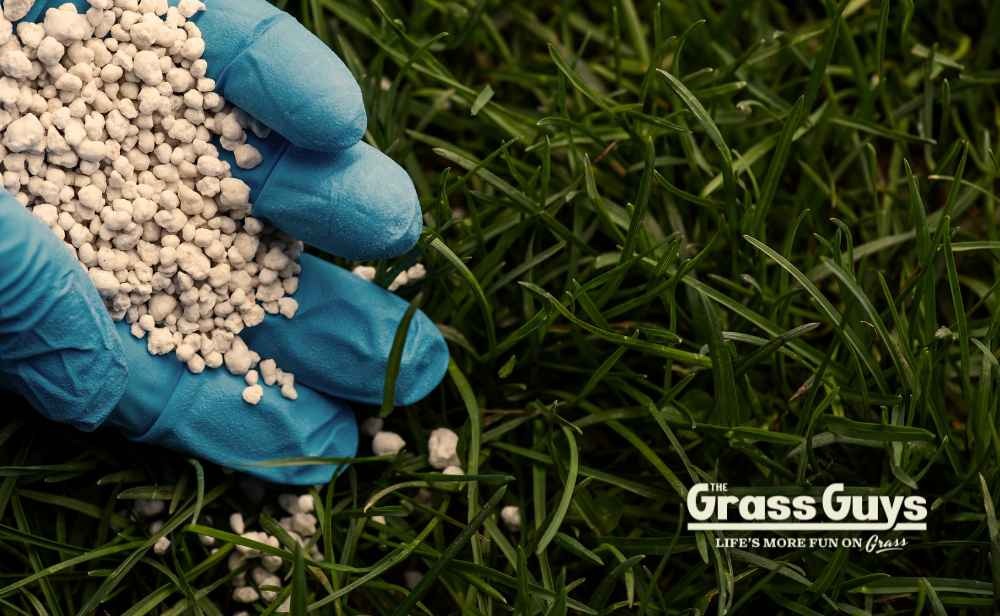
To apply 1 pound of nitrogen per 1,000 square feet:
- 1 ÷ nitrogen percentage as decimal = pounds of product per 1,000 square feet
To calculate annual nitrogen needs:
- Lawn square footage ÷ 1,000 × annual nitrogen target
That is the core formula.
Final Thoughts
Fertilizing is not complicated once you understand nitrogen math.
- Know your lawn size.
- Know your nitrogen percentage.
- Know your annual target.
- Break it into seasonal applications.
- Test your soil before guessing.
Strategic feeding builds stronger roots, thicker turf, and better long-term performance.
Guessing leads to wasted money and inconsistent results.