What Do NPK Numbers Mean on Fertilizer Bags?
How to Read Fertilizer Labels and Choose the Right One
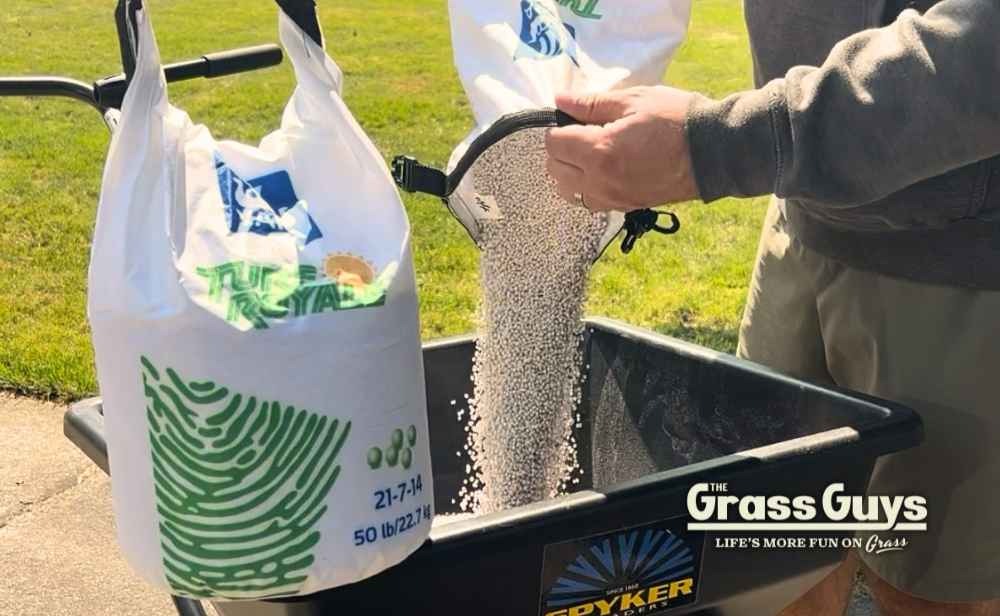
If you have ever looked at a fertilizer bag and seen something like:
24-0-10
or
10-10-10
You have seen the NPK ratio.
Those three numbers tell you exactly what nutrients are inside the bag.
Understanding them helps you:
- Choose the right product
- Avoid over-fertilizing
- Feed your lawn at the right time
- Stop guessing
Let’s break it down in plain terms.
What Does NPK Stand For?

NPK represents the three primary nutrients in fertilizer:
N = Nitrogen
P = Phosphorus
K = Potassium
The numbers show the percentage by weight of each nutrient in the bag.
Example:
A 24-0-10 fertilizer means:
24 percent nitrogen
0 percent phosphorus
10 percent potassium
The remaining percentage is filler and carrier material.
What Does Each Macronutrient Do (N, P, and K)?
The first number: Nitrogen (N) will fuel growth.
The second number: Phosphorous (P) will support root development and establishment.
The third number: Potassium (K) will strengthen the plant.
Think: Up, Down, All-Around:
Nitrogen will promote top-growth
Phosphorous will promote root development down under the soil
Potassium will help strengthen the plant all around
What Does Nitrogen Do? (The First Number)

Nitrogen drives:
- Green color
- Leaf growth
- Density
- Overall vigor
It is the most important nutrient for cool-season lawns.
If your lawn looks pale or thin, nitrogen is usually the nutrient involved.
However, too much nitrogen can:
- Increase mowing frequency
- Encourage disease
- Create soft growth during heat
Nitrogen is powerful. Use it strategically.
What Does Phosphorus Do? (The Second Number)

Phosphorus supports:
- Root development
- Energy transfer
- Establishment of new grass
It is most important during:
- Seeding
- Overseeding
- Full lawn renovations
Established lawns often do not need much phosphorus unless a soil test shows a deficiency.
Many states restrict phosphorus use unless seeding is occurring.
What Does Potassium Do? (The Third Number)

Potassium improves:
- Stress tolerance
- Drought resistance
- Disease resistance
- Winter hardiness
It strengthens the plant without pushing excessive top growth.
Potassium is often included in fall fertilizer programs to improve winter survival.
How to Read an Example Fertilizer

Let’s say you see:
30-0-4
This means:
High nitrogen
No phosphorus
Moderate potassium
That is typically a maintenance fertilizer for established lawns.
Now compare that to:
12-12-12
This is balanced, meaning equal parts of Nitrogen, Phosphorous, and Potassium.
That type is more common in garden fertilizers than lawn-specific programs.
For cool-season lawns, balanced fertilizers are rarely needed unless a soil test supports it.
Why the Ratio Matters More Than the Numbers

The ratio tells you the nutrient focus.
For example:
- High first number means growth and green-up.
- Higher third number means stress tolerance support.
- Higher second number usually means establishment focus.
Different seasons call for different ratios.
Typical NPK Strategy for Cool-Season Lawns
Spring:
Light applications of nitrogen

Summer:
Light nitrogen if needed, avoid heavy feeding.

Fall:
Higher nitrogen and moderate potassium.

Seeding:
Starter fertilizer with phosphorus included.
Your fertilizing plan should change with the season.
👉 See: Fertilizing & Soil Health Guide
👉 See: Cool-Season Lawn Calendar
How Much Actual Nitrogen Are You Applying?

The percentage tells you how much nutrient is in the bag, but the application rate matters more.
Example:
If you apply 4 pounds of a 25-0-5 fertilizer per 1,000 square feet:
- 25 percent of 4 pounds is 1 pound of nitrogen.
That means you applied 1 pound of nitrogen per 1,000 square feet. This is how fertilizer programs are calculated.
Understanding this prevents over-application.
Common Mistakes with NPK

Choosing fertilizer based only on the highest first number.
Applying phosphorus when not needed.
Ignoring potassium during stress seasons.
Not measuring application rates.
More nutrients do not automatically mean better results.
Balanced feeding based on timing and soil condition works best.
Should You Always Use the Same NPK?
No.
Your lawn’s needs change throughout the year.
Early spring feeding is different from fall root-building feeding.
If you want to remove guesswork, start with a soil test.
👉 See: Soil Testing Guide
Do NPK Numbers Tell the Whole Story?

No.
You should also look for:
- Slow release nitrogen percentage
- Micronutrients like iron
- Application rate instructions
- Seasonal labeling
The three numbers tell you the major nutrients, but they are part of a bigger picture.
Final Thoughts
NPK numbers are not complicated once you understand them.
The first number: Nitrogen (N) will fuel growth.
The second number: Phosphorous (P) will support root development and establishment.
The third number: Potassium (K) will strengthen the plant.
Think: Up, Down, All-Around
Nitrogen will promote top-growth
Phosphorous will promote root development down under the soil
Potassium will help strengthen the plant all around
Choose fertilizer based on:
- Season
- Lawn condition
- Soil test results
Not just the biggest number on the bag.
Feed intentionally.
Feed strategically.
Let the soil and season guide you.