How to Overseed a Lawn for Beginners
The Simple Way to Make Your Lawn Thicker
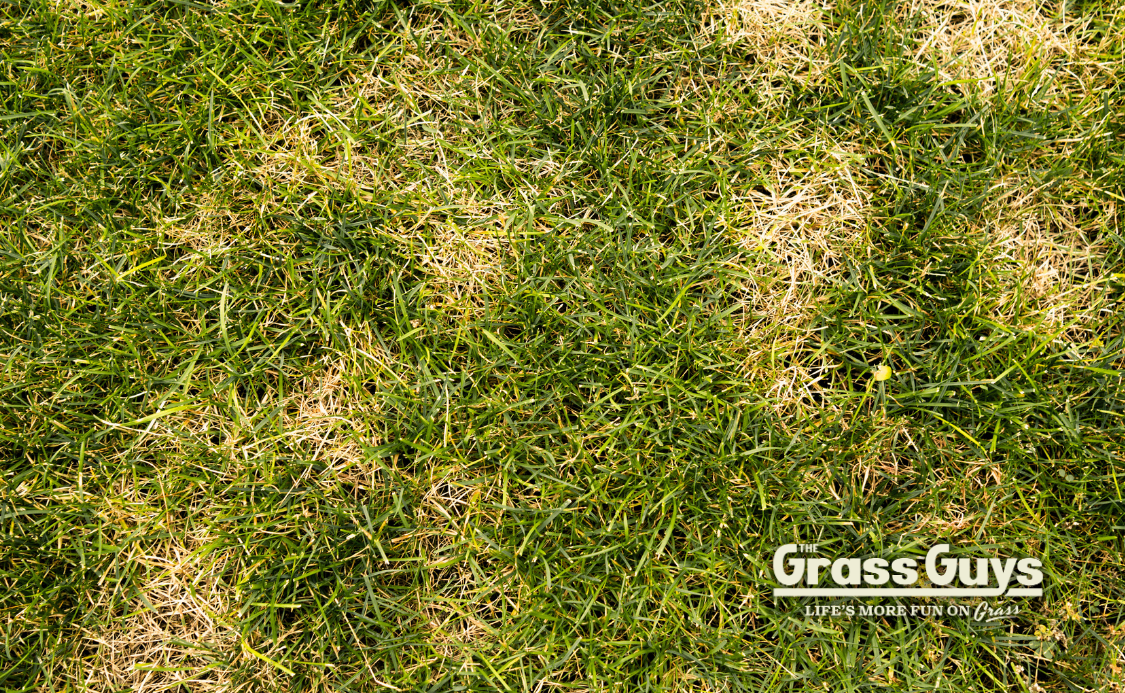
If your lawn looks:
- Thin
- Patchy
- Weedy
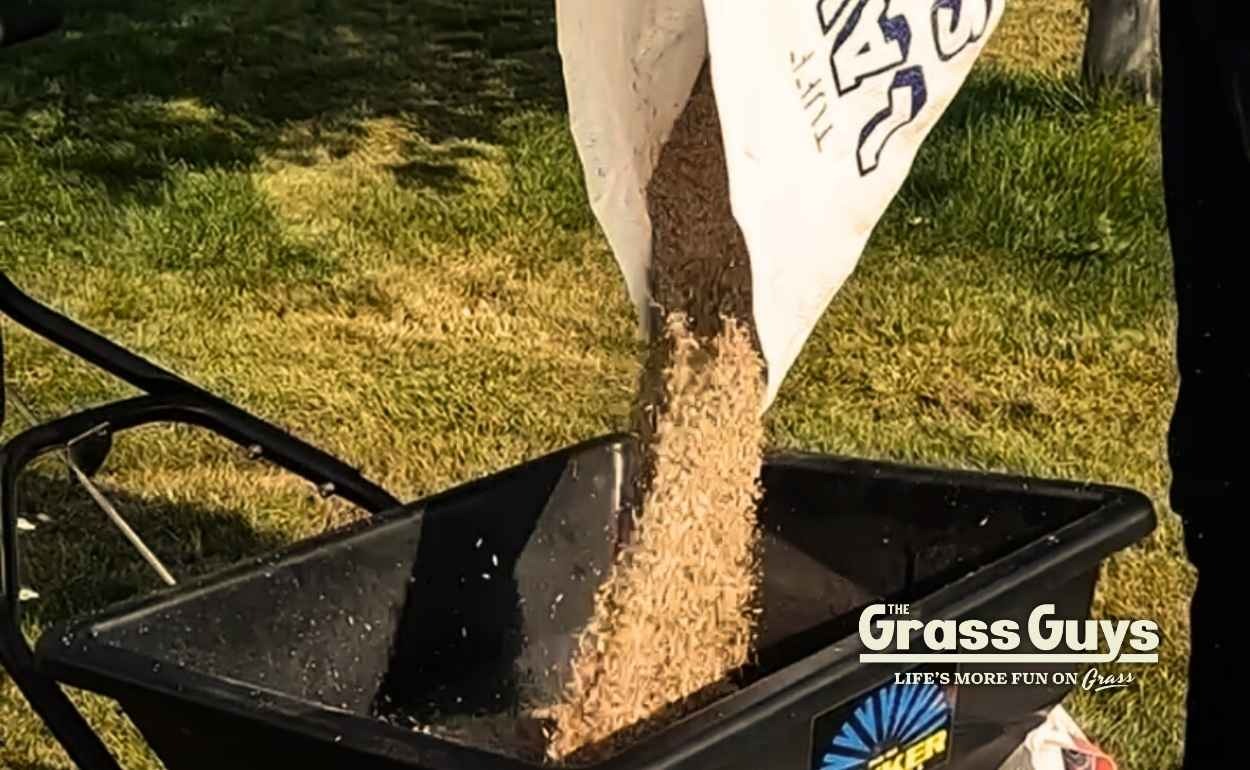
Overseeding is one of the highest-return things you can do. Before making an impulse decision, we cannot stress the importance of choosing the right grass seed for your lawn. Not all grass seed is the same, nor performs the same from yard-to-yard. Most homeowner skimp out on this step and instantly regret it after they realized there were better options out there.
Do yourself a favor and download our free guide "What Grass is Best for Me?" where we share our top grass seed picks that are best for you, your local environment, that also pair with your lifestyle.
Overseeding simply means:
Spreading new grass seed into an existing lawn to increase density.
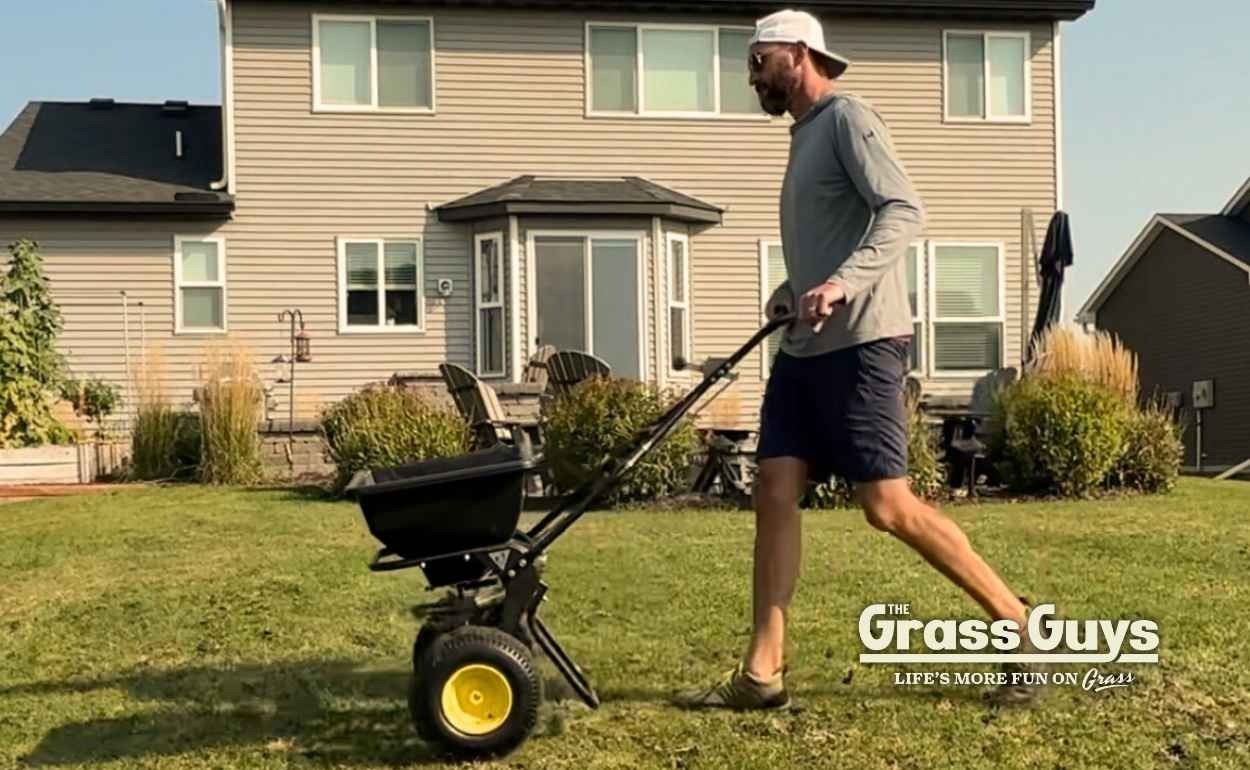
You’re not starting over. You’re building on what’s already there.
When done correctly, overseeding can:
- Thicken turf
- Crowd out weeds
- Improve color
- Increase drought tolerance
- Upgrade grass varieties
Here’s the simplified version of how to do it.
The 7-Step Overview of Overseeding Your Law
1. Mow Shorter Than Normal Before Seeding

Cut your lawn slightly shorter than usual before seeding.
Why?
- Reduces competition from existing grass
- Improves seed-to-soil contact
- Opens the canopy for better light penetration
Don’t scalp your grass, just lower it slightly.
Taking it down to 2” is plenty for most overseeding projects. This can be done over several mows if it’s longer than usual.
2. Create Seed-to-Soil Contact
We cannot stress this part enough: Grass seed requires proper contact with soil to germinate.
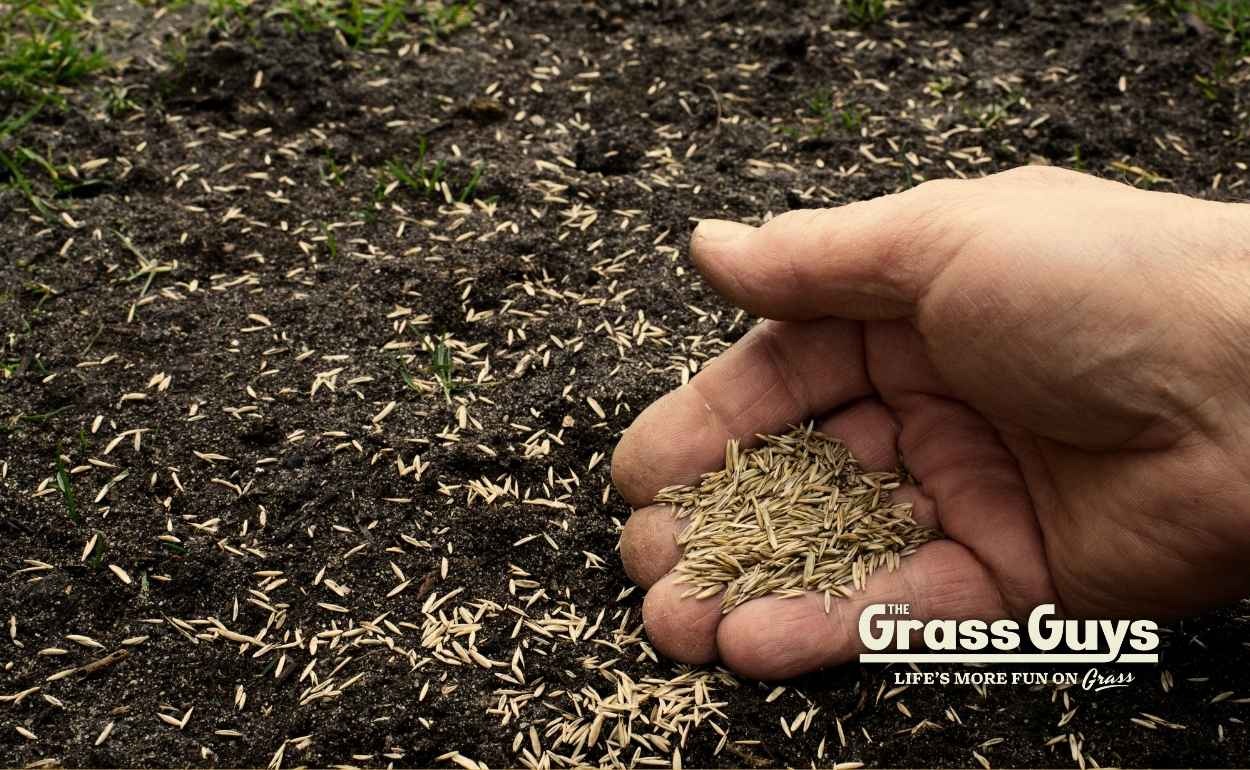
Options include:
- Raking aggressively (dethatching, see below)
- Core aerating
- Using a dethatcher (if needed)
- Slit seeding
3. Removing thatch
This is completed through the process of dethatching.
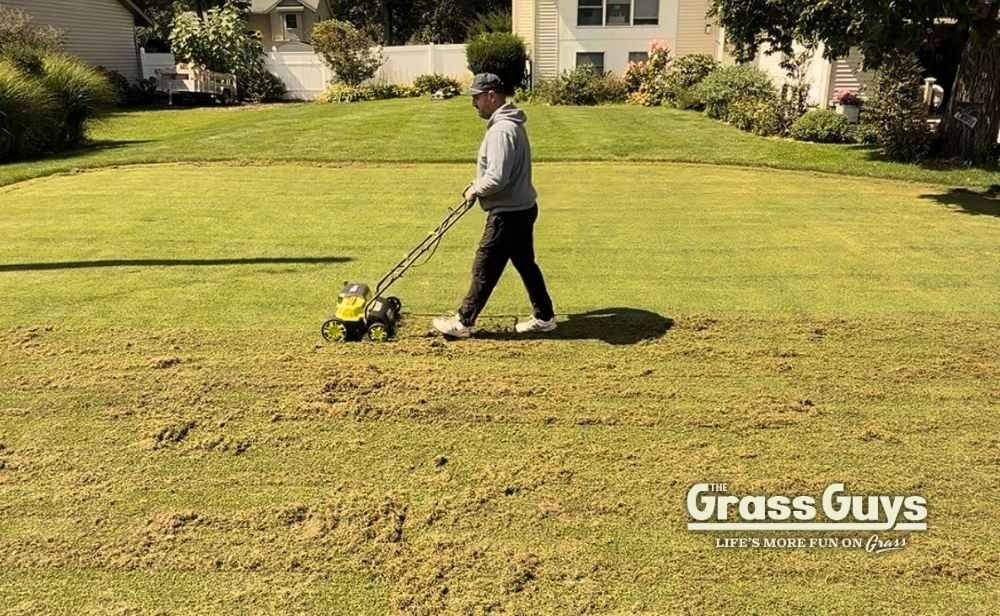
Effectively removing a layer of dead grass, organic material, and any debris sitting on top of the soil layer that would otherwise prevent your grass seed from achieving proper seed-to-soil contact.
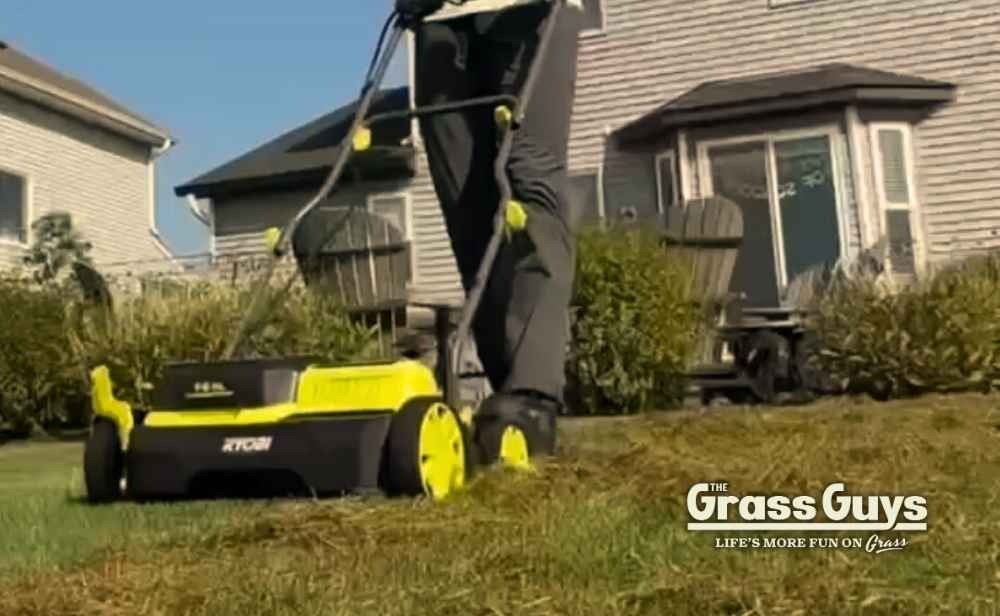
If seed sits on top of thick thatch, success drops dramatically. Removing the thatch layer with a dethatcher or a power rake will dramatically increase the overall success of your seeding project.
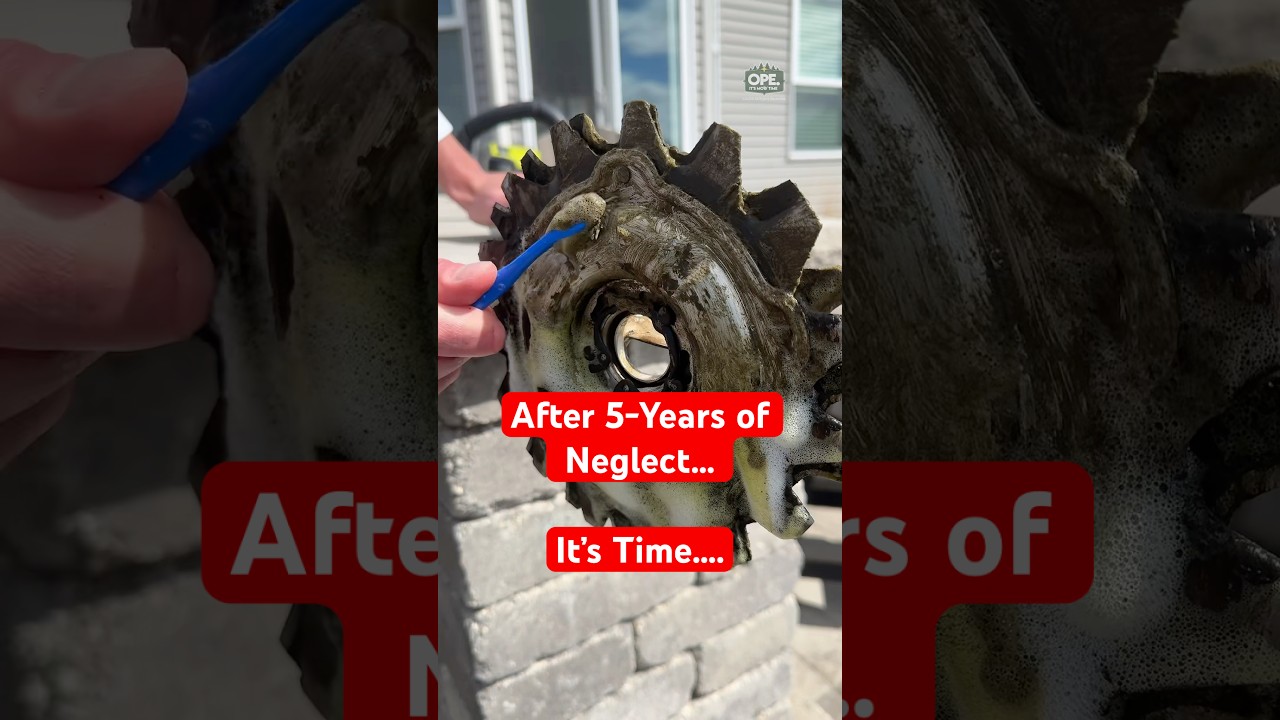
This is the step most homeowners skip. Just look at what is sitting beneath the canopy of your lawn!
If it wasn’t obvious by now, the goal is to remove the thatch from the soil layer. This means removing it from the lawn entirely once it is pulled up.
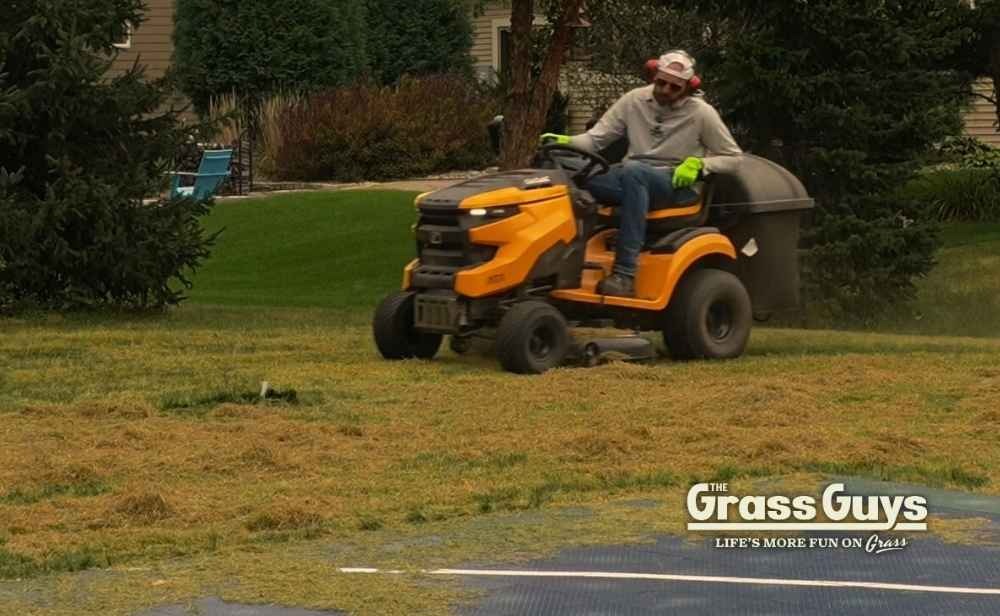
The easiest way to accomplish this is by attaching your bagger on your mower for removal. However, you can also hand rake and dispose as well if you do not have access to a bagger, or for smaller areas.
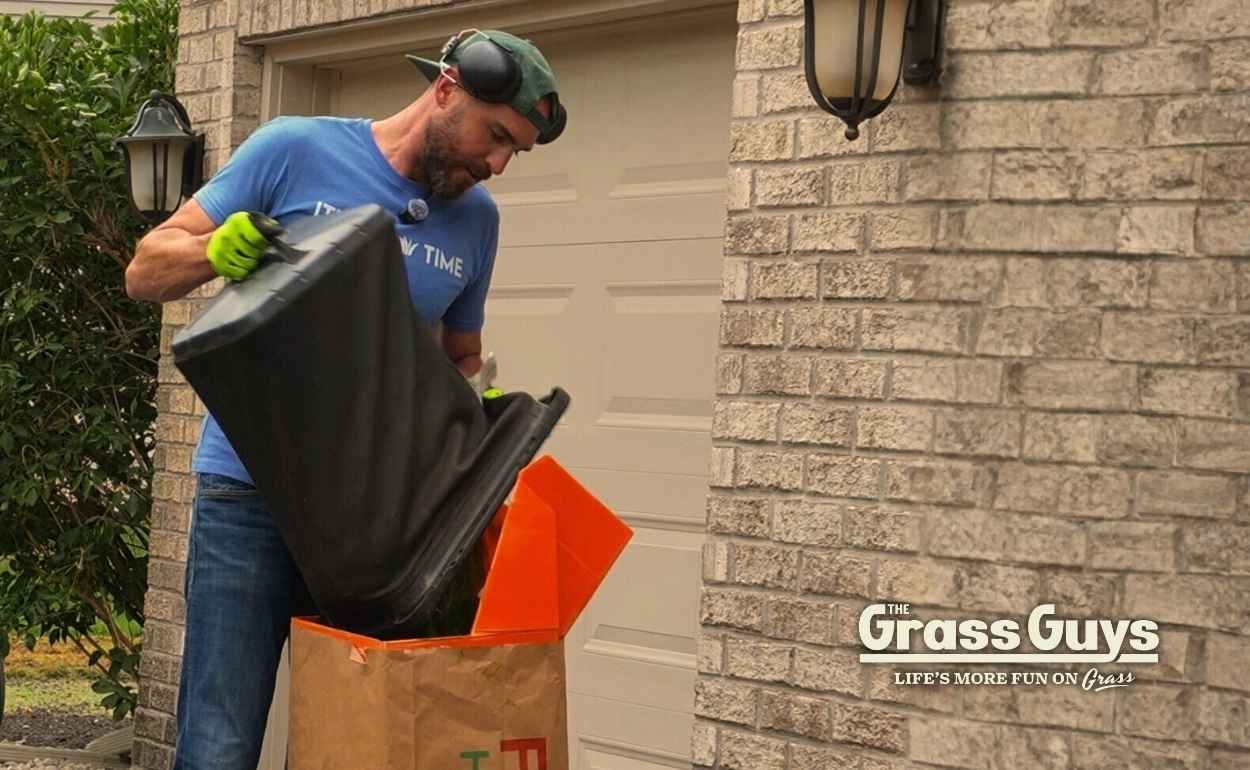
If you do not have the luxury of a compost service or live near a wooded area that allows dumping, we highly recommend using a leaf bagging tool and recycled leaf bags.
Be sure to call around locally, as many cities and/or waste removal companies will accommodate for a one-time pick up for a charge.
4. Core aeration (optional, but encouraged)
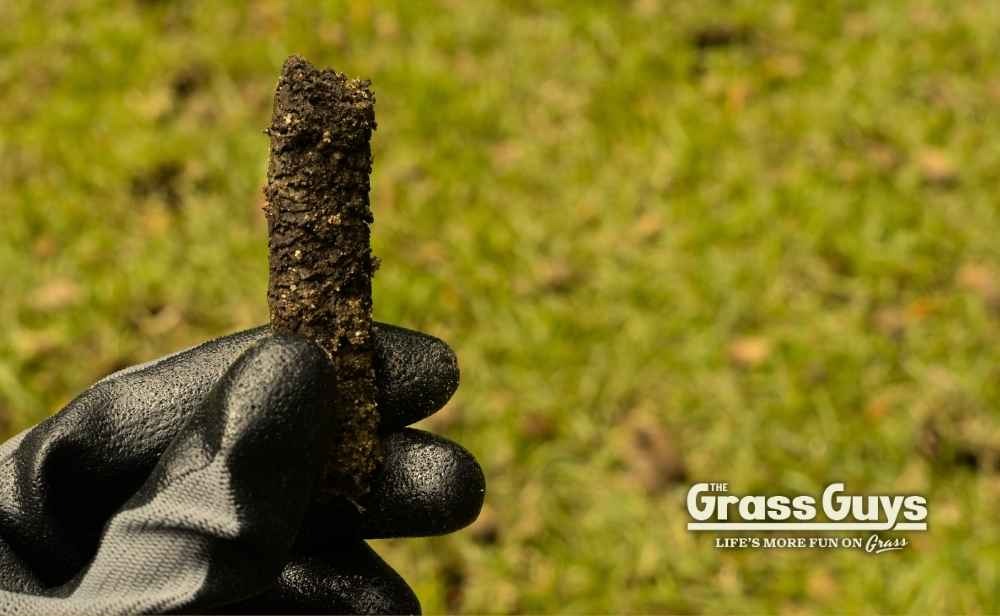
Core aeration is the process of removing small plugs of soil and thatch from a lawn to relieve compaction and improve the movement of air, water, and nutrients into the root zone.
Aerating and overseeding help build a thicker, healthier lawn that is better able to compete with weeds. Aeration relieves soil compaction and improves water movement, which can reduce conditions that favor disease and weed pressure.
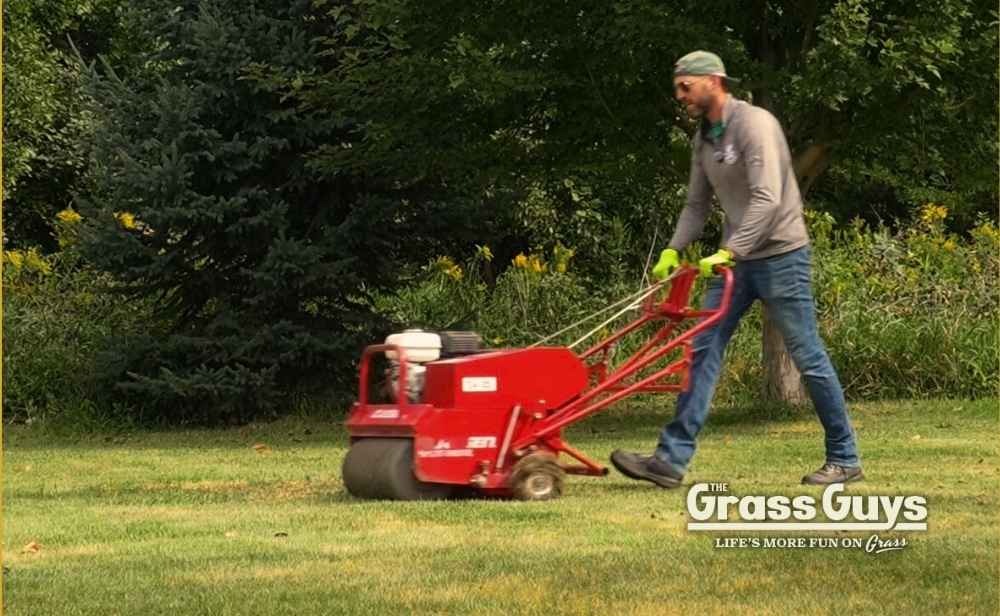
Aeration also helps established lawns by improving the movement of water, air, and nutrients into the root zone. When overseeding, the holes created by aeration also improve seed-to-soil contact, which is critical for successful germination.
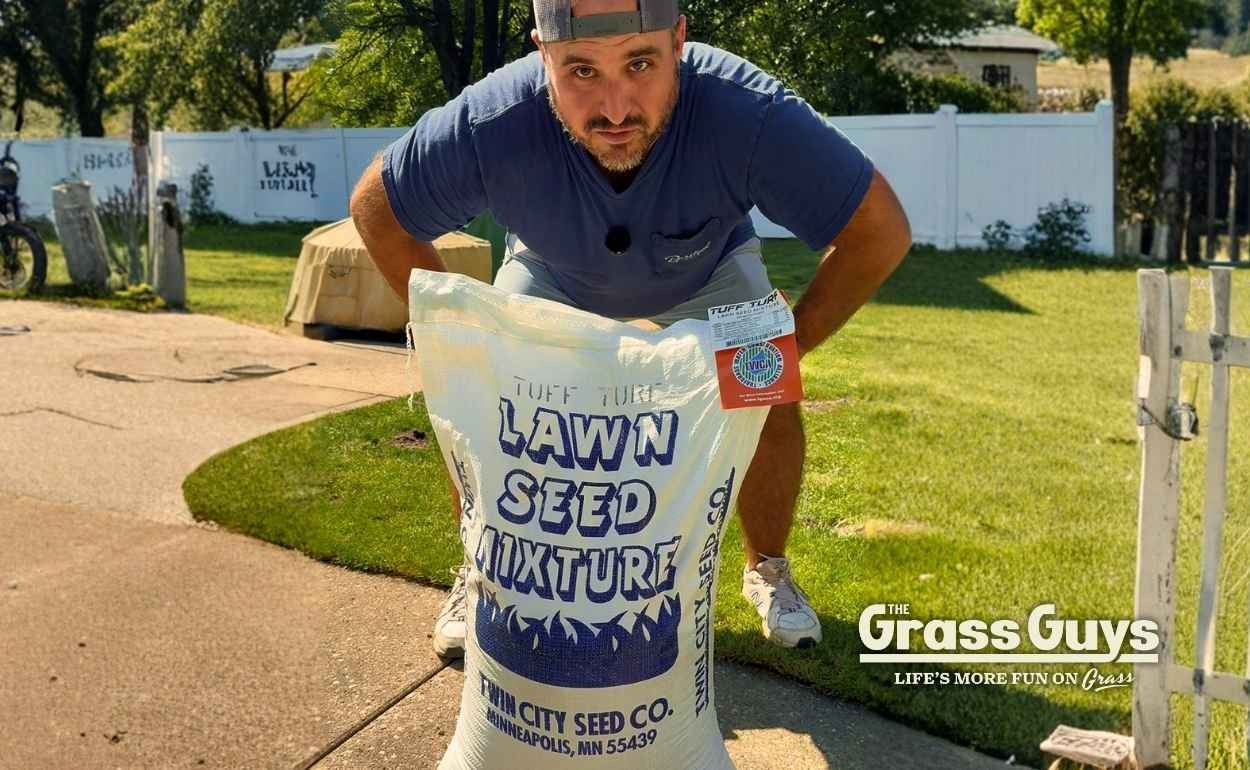
5. Spread Quality Seed Evenly
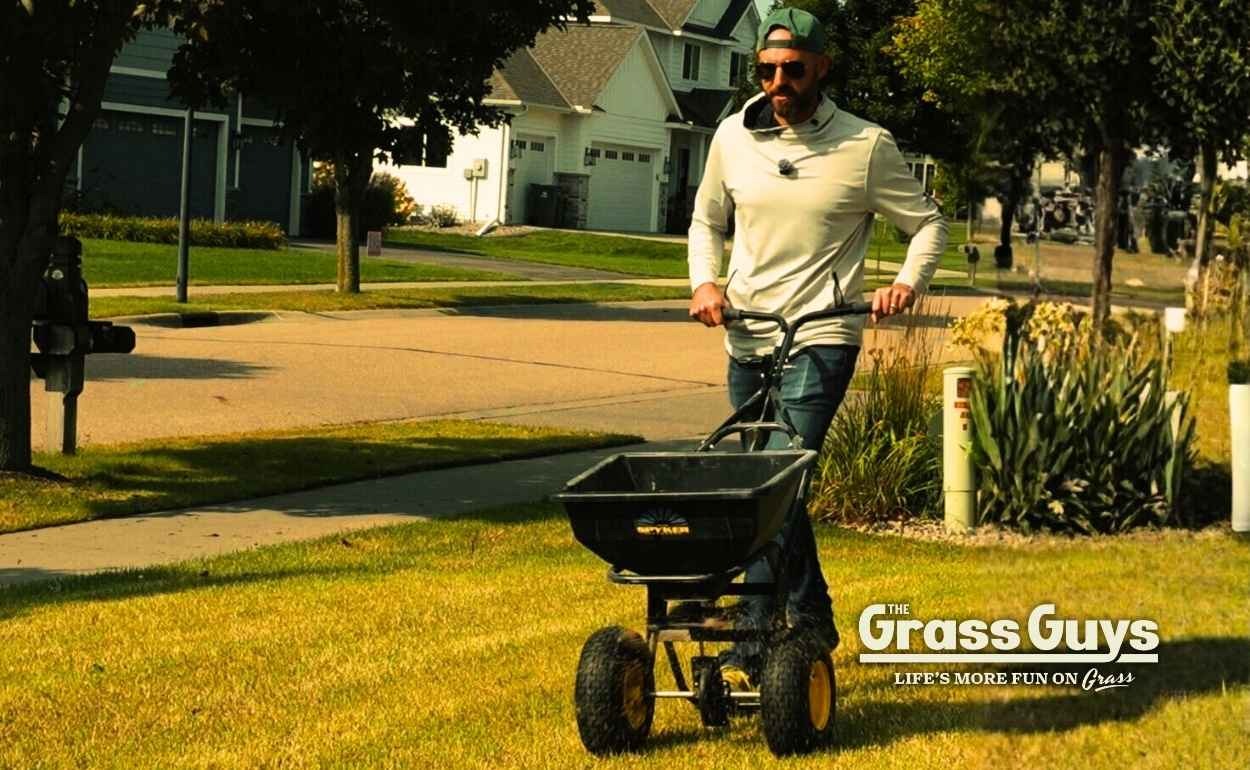
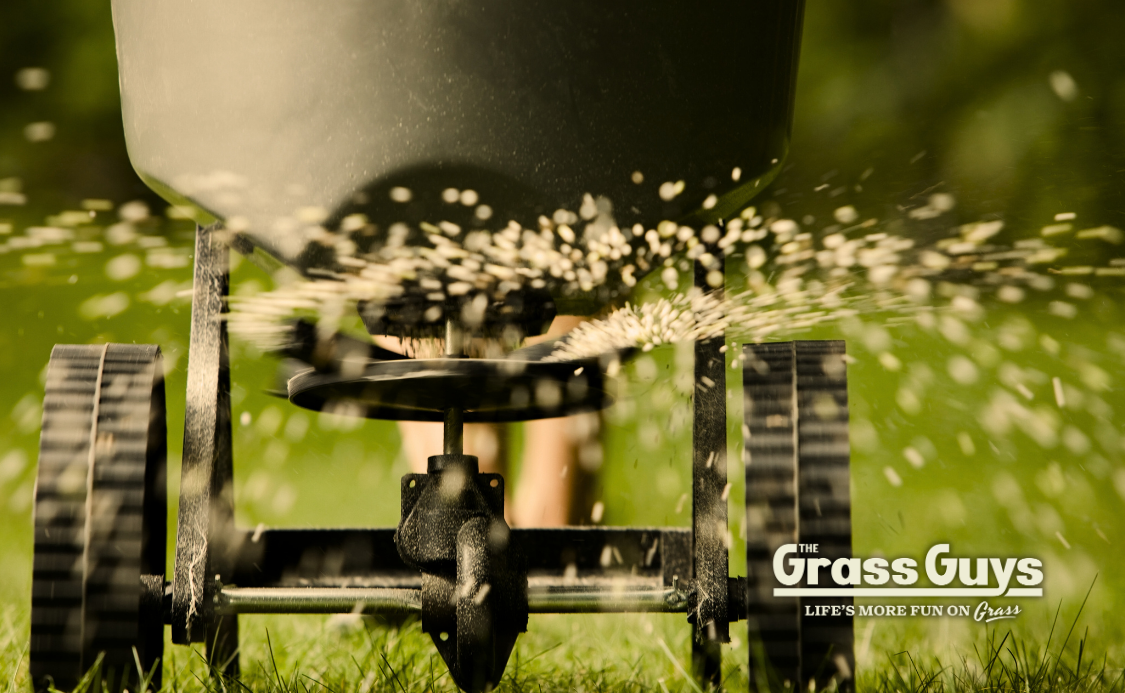
Use a broadcast spreader for uniform coverage.
Typical overseeding rate (cool-season grasses):
- 3–7 lbs per 1,000 sq ft, depending on seed used.
Always check your specific seed label.
Pro tip:
Go in two directions (crosshatch pattern) at a lighter spreader setting for better coverage.
👉 Not sure what seed to use? Download: What Grass is Best for Me? (Free Guide)
6. Optional, but Encouraged: Apply Starter Fertilizer
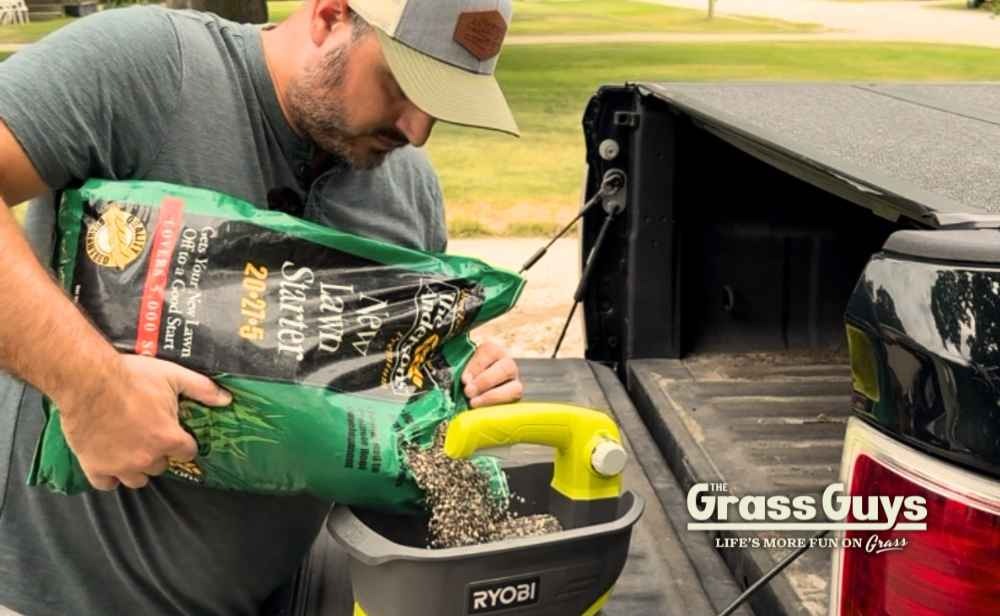
Starter fertilizer gives new seedlings a boost.
It’s not mandatory, but it helps early development and focuses on root development for new grass plants. If you recently fertilized, you may not need more.
As always refer to local regulations and the label instructions when applying products to your property.
7. Water Consistently
The most important step aside from proper seed-to-soil contact
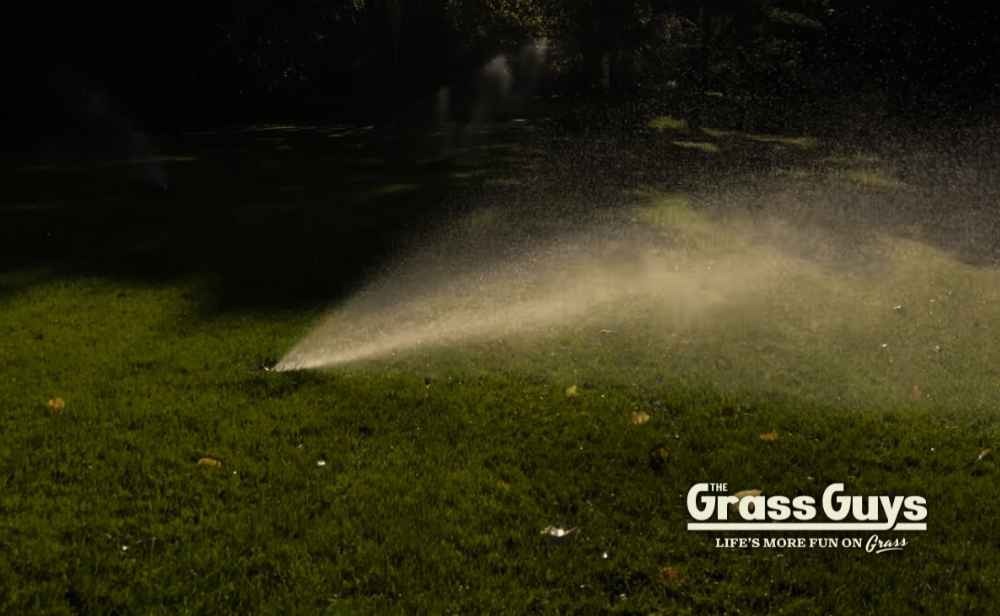
Until majority of germination has occurred:
- Keep the soil consistently moist
- Light, frequent watering
- Do not let the surface dry out
This can range from 7-21 days in optimal growing conditions, depending on grass type used.
Once seedlings establish:
- Transition to deeper, less frequent watering.
- This builds stronger roots.
When Should You Overseed?
For cool-season lawns:
Best Time: Early Fall
Why fall?
- Warm soil
- Cooler air
- Less weed competition
- Longer establishment window before summer stress
Fall overseeding builds elite lawns.
Second Best: Spring
Definitely possible, but you need to consider a few things:
- More weed pressure
- Less time before summer heat
- Unpredictable weather patterns, in comparison to fall
👉 See: Cool-Season Lawn Calendar
What Overseeding Fixes and What It Doesn’t
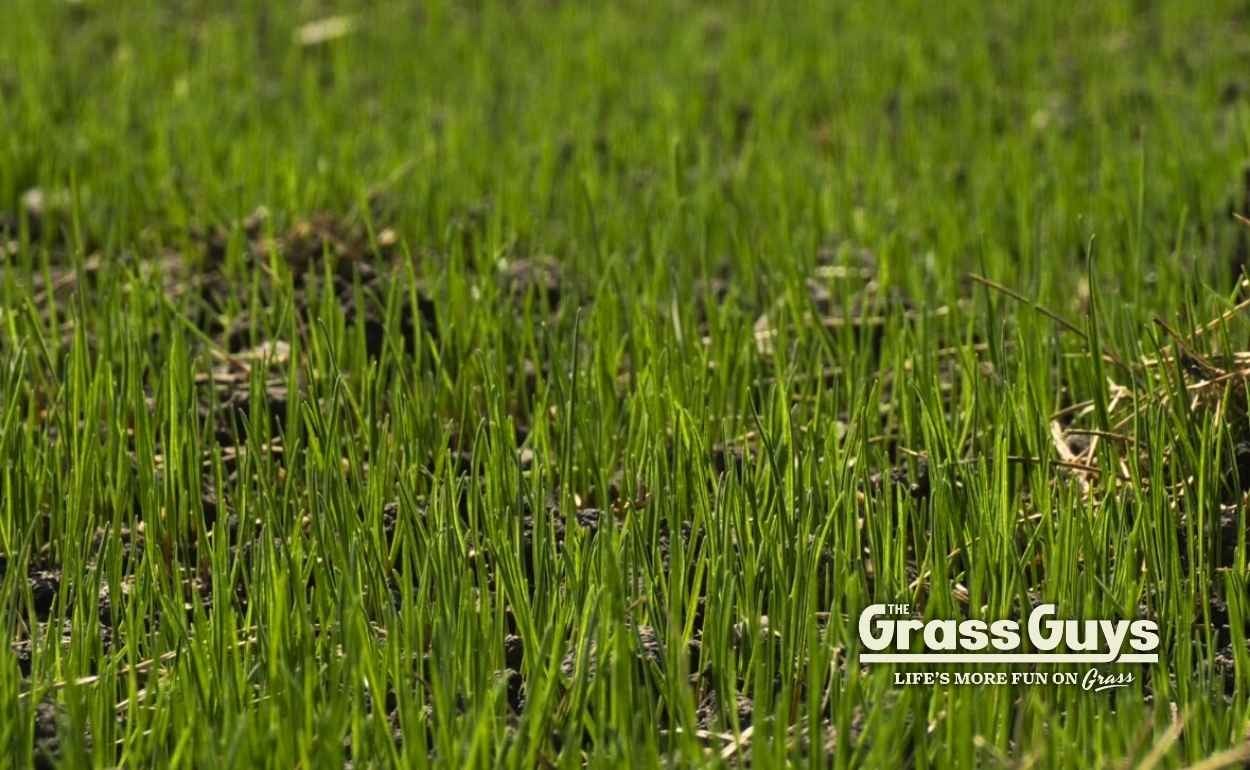
Overseeding Helps With:
- Thin lawns
- Minor bare spots
- Grass upgrades
- Density improvement
Overseeding Won’t Fix:
- Major soil issues
- Severe compaction (without aeration)
- Deep shade without shade-tolerant seed
- Chronic drainage problems
Match expectations to conditions.
Common Overseeding Mistakes
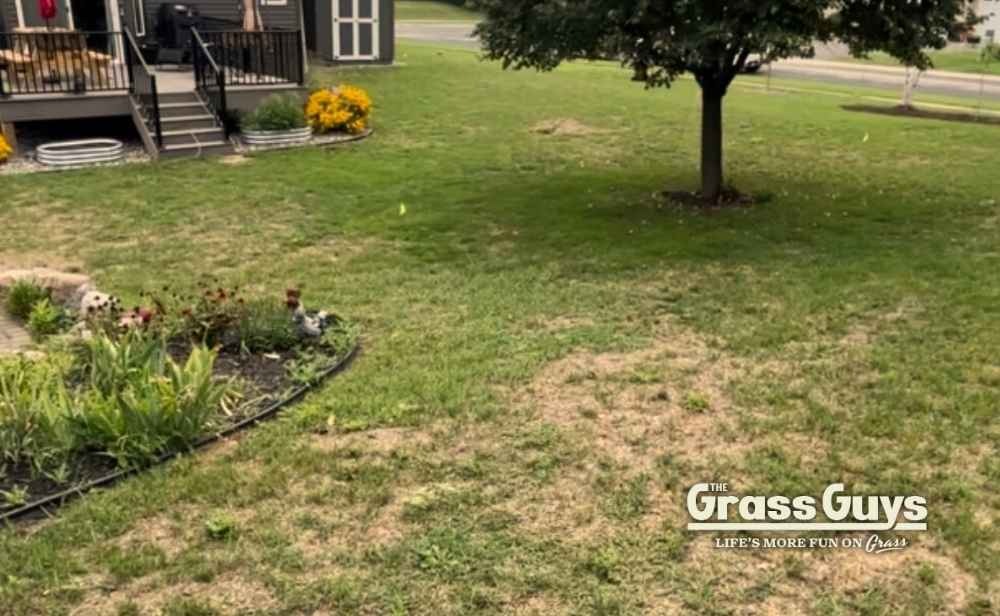
Avoid these:
- Seeding too late in fall
- Skipping soil contact
- Using cheap seed (Instead, use elite seed)
- Underwatering during germination
- Cutting too short after seedlings emerge
Most failures happen during watering.
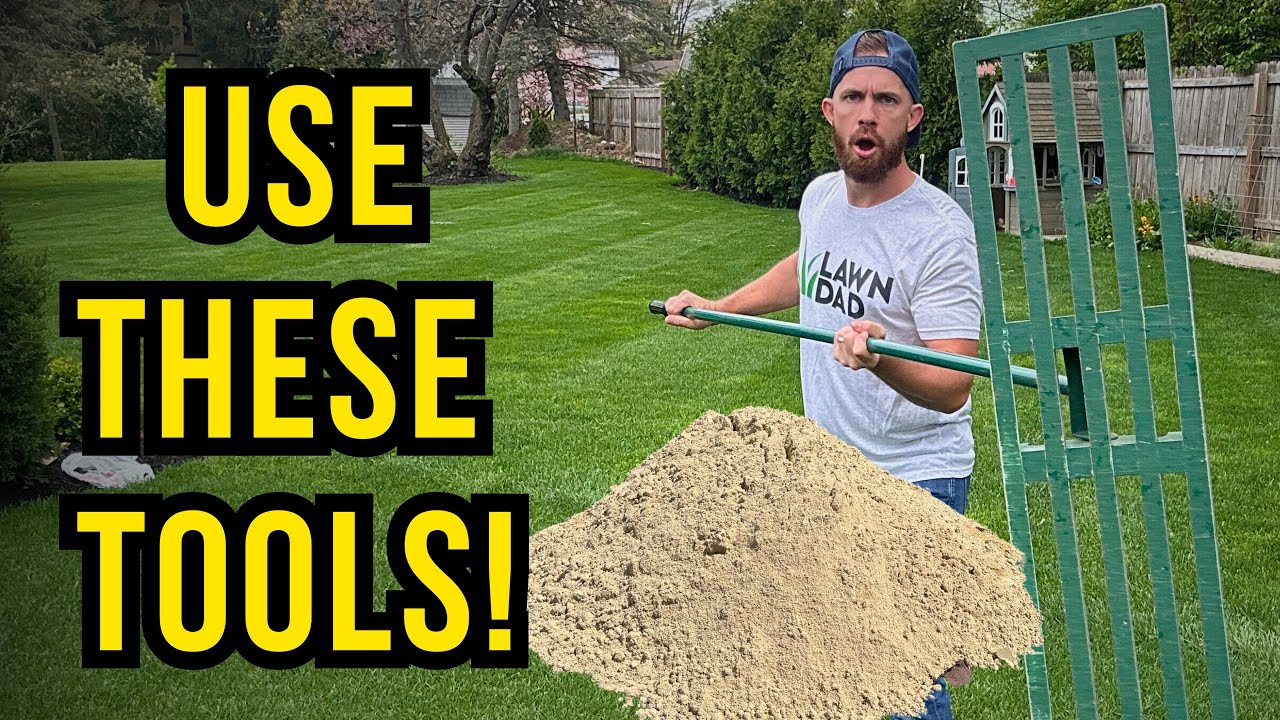
What You Need to Overseed
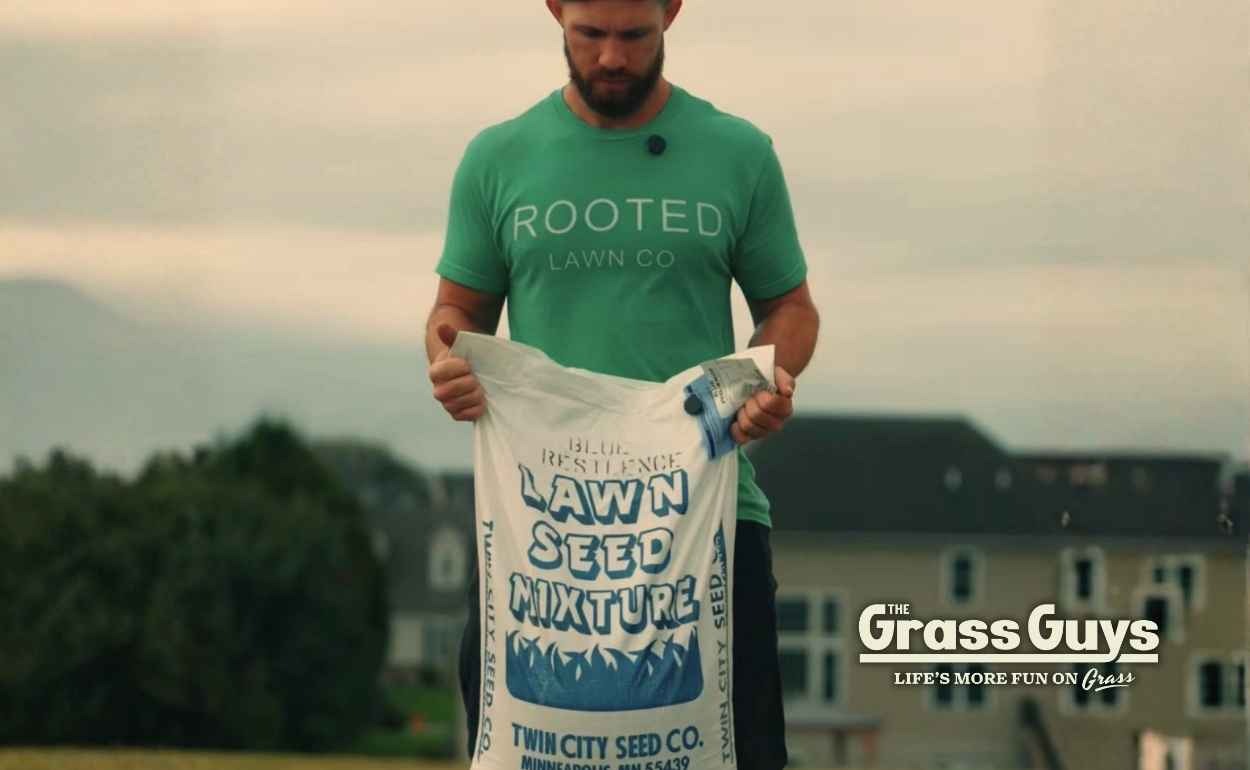
At minimum:
- Quality grass seed
- Broadcast spreader
- Hose sprinkler or irrigation
- Optional: aerator
👉 See: Lawn Starter Kit
👉 See: Recommended Seeding Tools
How Long Until You See Results?
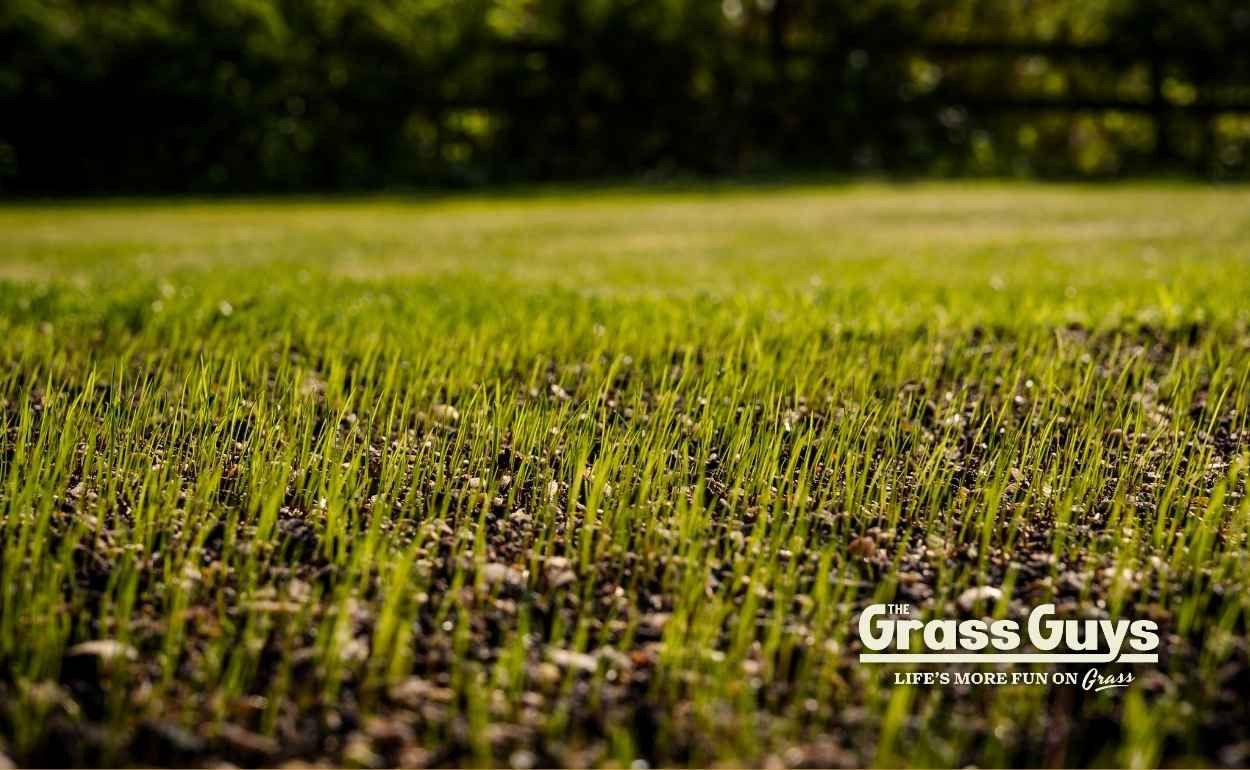
Germination times vary:
- Perennial Ryegrass → 5–10 days
- Tall fescue → 7–14 days
- Kentucky bluegrass → 14–21+ days
Visible thickening:
- 4–6 weeks
Full transformation: - 1–2 seasons
Overseeding compounds over time.
Final Thoughts
If you only do one thing to improve your lawn this year, make it overseeding.
It’s the difference between:
“Maintaining a lawn”
and
“Building a lawn.”
Download our Free Guide for our top seed picks for your lawn: "What Grass is Best for Me?"
Seed smart. Time it right. Water consistently.
Your lawn will separate itself.