
What Kind of Grass Do I Have?

What Kind of Grass Do I Have?
A Simple Guide to Identifying the Grass in Your Lawn
Cool-Season and Transition Zone Grass Types
Before you change your mowing height, buy new seed, or start a fertilizer plan…
You need to answer one simple question:
What kind of grass do I actually have?
Because everything in lawn care — mowing, watering, fertilizing, overseeding — depends on the type of grass growing in your yard.
If you live in the northern U.S. (especially the Midwest), you almost certainly have a cool-season lawn.
Let’s identify it.
Quick Answer (Most Homeowners)
If you live in a cool-season region, your lawn is likely a mix of:
- Kentucky Bluegrass
- Perennial Ryegrass
- Tall Fescue
- Fine Fescue
Most modern lawns are made up of blends versus a single grass type.
Now let’s break each one down so you can identify yours.
Cool-Season vs Warm-Season Grass
Before getting specific, we need to separate the two major grass categories.
Cool-season grasses:
- Thrive in spring and fall
- Stay green longer into autumn
- Struggle in extreme summer heat
- Common in northern states
Warm-season grasses:
- Thrive in summer heat
- Go dormant and brown in winter
- Common in southern states
If you live in:
- Minnesota
- Wisconsin
- Michigan
- Illinois
- New England
- Pacific Northwest
You almost definitely have cool-season turf.
The 4 Most Common Cool-Season Grass Types
Most northern lawns are a combination of these four.
Kentucky Bluegrass
How to Identify It
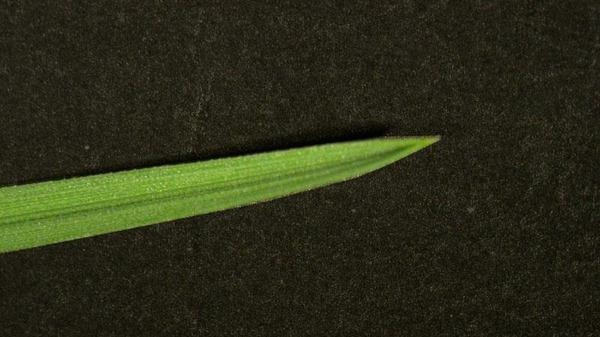
- Medium-width blades
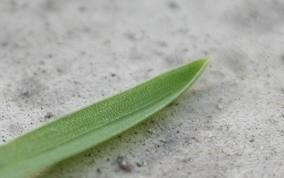
- Boat-shaped leaf tip
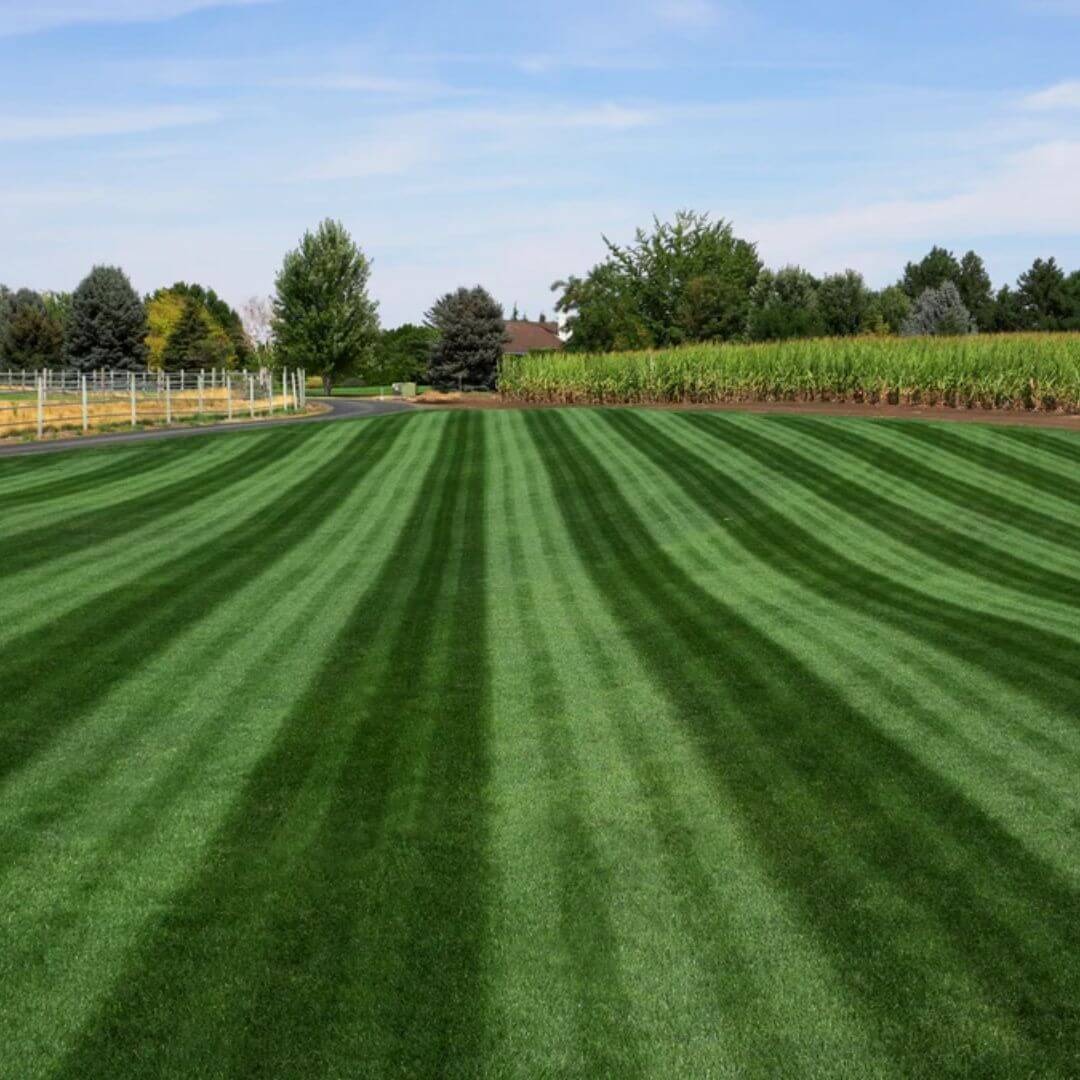
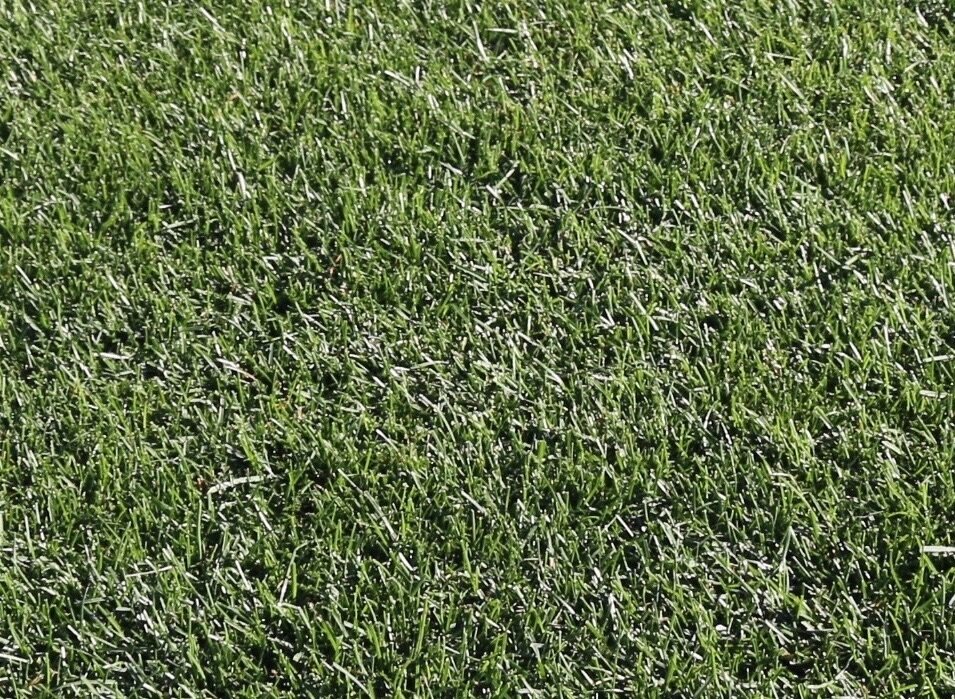
- Dense, carpet-like growth
- Spreads underground (rhizomes)
Why Homeowners Love It
- Deep green color
- Excellent striping potential
- Self-repairing due to spreading roots
Downsides
- Needs more water than fescue
- Struggles in heavy shade
Kentucky bluegrass is the backbone of many premium northern lawns.
Perennial Ryegrass
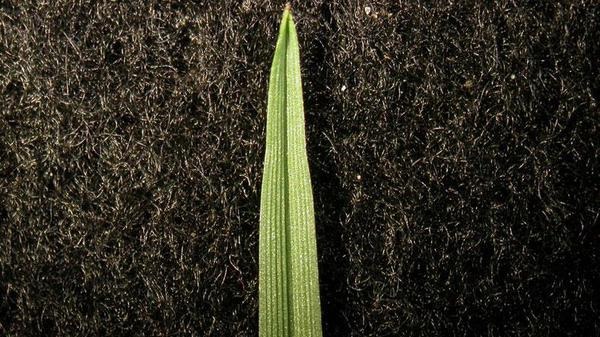
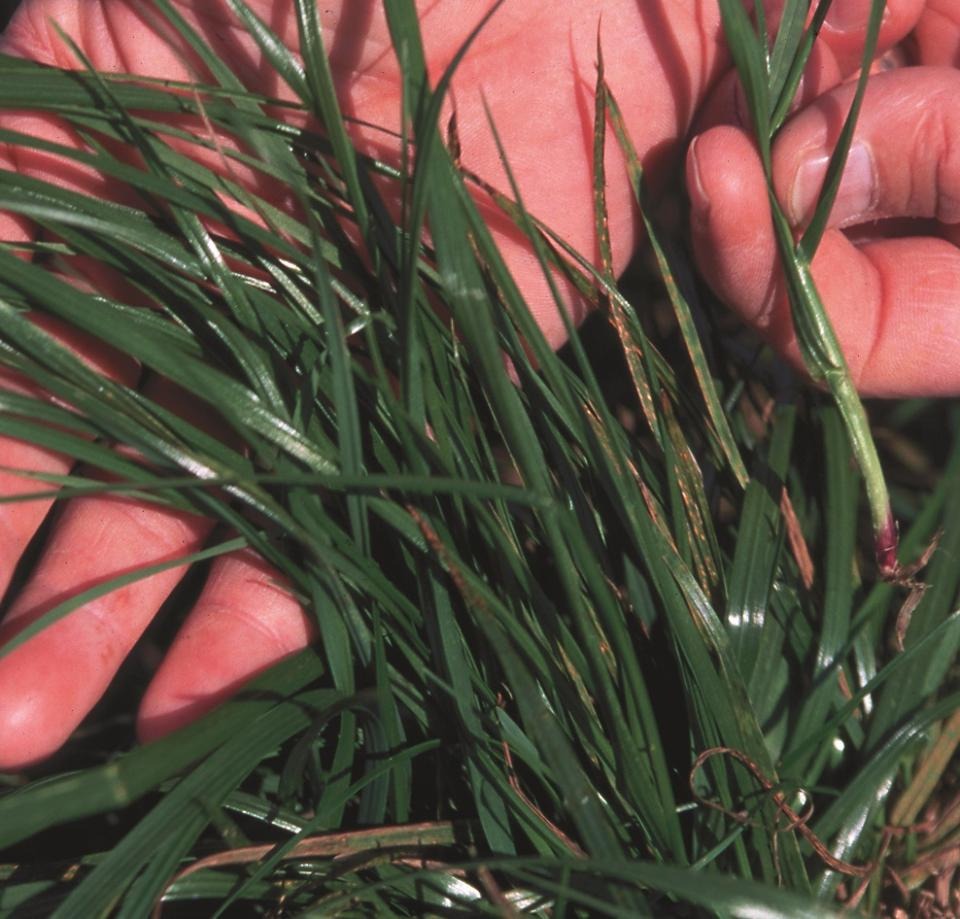
How to Identify It
- Narrow blade
- Shiny underside
- Germinates very fast (5–7 days)
- Grows in bunches (does not spread)
Why It’s Used
- Fast establishment
- Great for overseeding
- Strong wear tolerance
Downsides
- Doesn’t self-repair like bluegrass
- Can thin over time without overseeding
If your lawn greened up quickly after seeding, ryegrass is probably in the mix.
Tall Fescue (also referred to as: Turf-Type Tall Fescue)
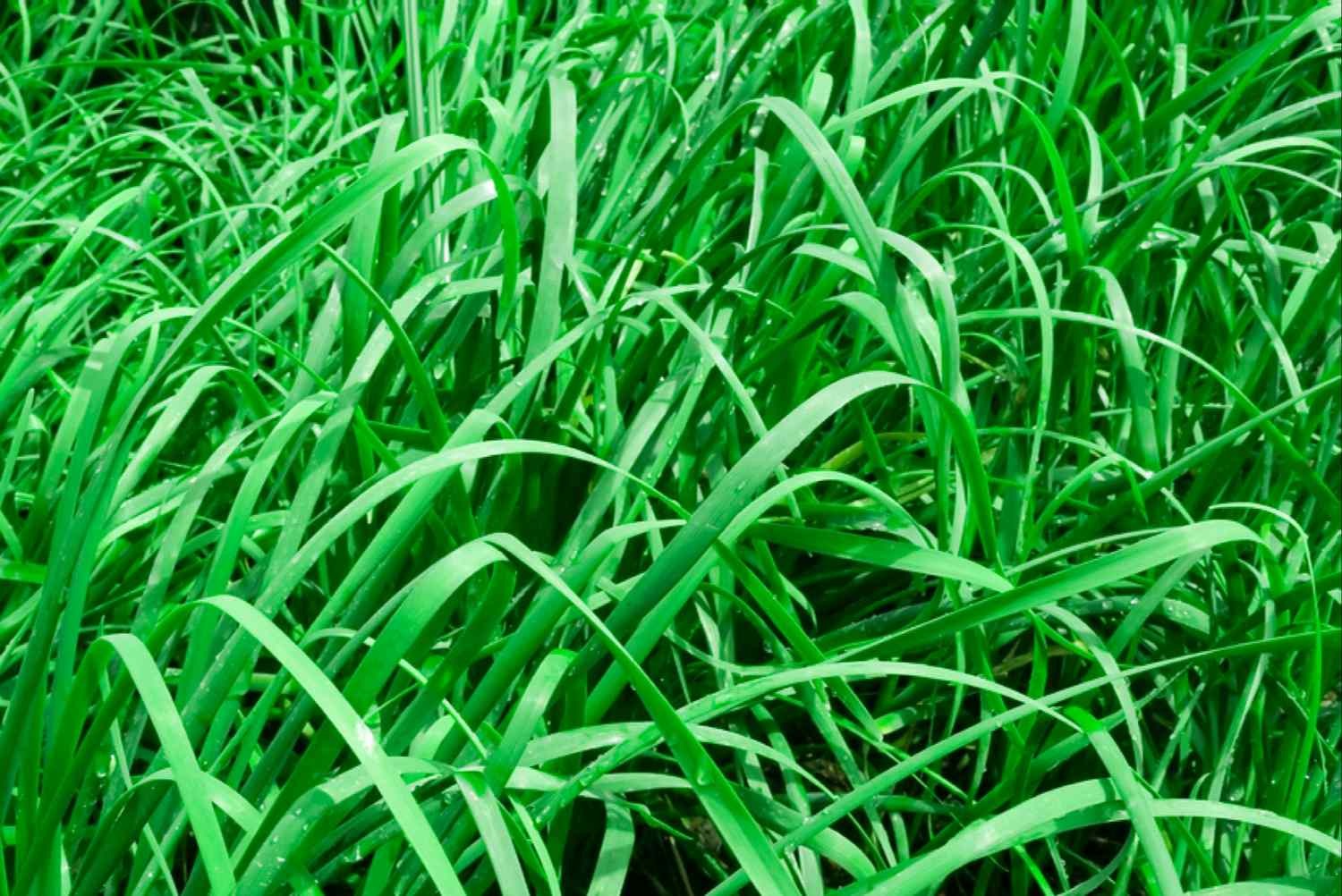
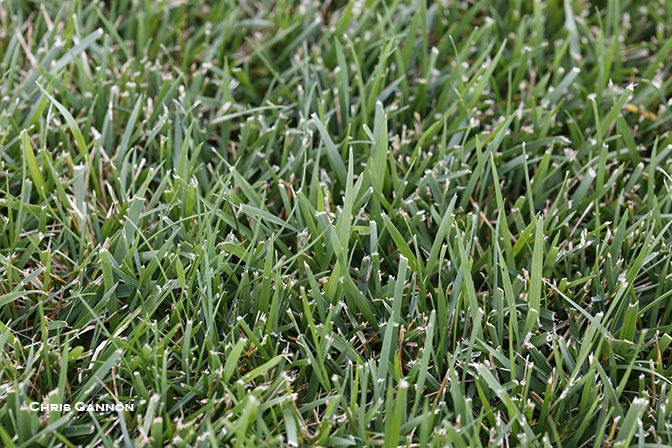
How to Identify It
- Wider blades than bluegrass
- Coarser texture
- Deep root system
- Bunch-type growth
Why It’s Gaining Popularity
- More drought tolerant
- Handles heat better
- Lower water demand
Downsides
- Does not spread via rhizomes
- Can look patchy if not overseeded
Tall fescue is becoming more common in modern seed blends, especially in transition zones.
Fine Fescue
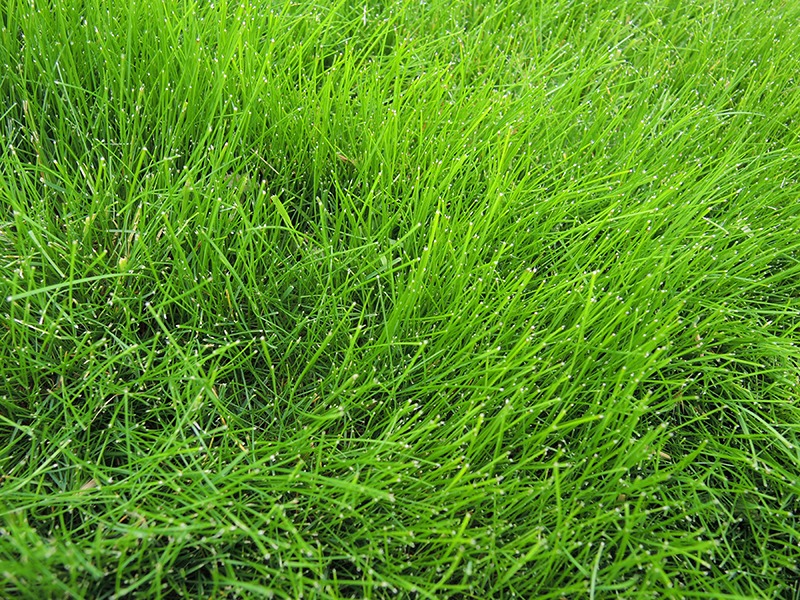
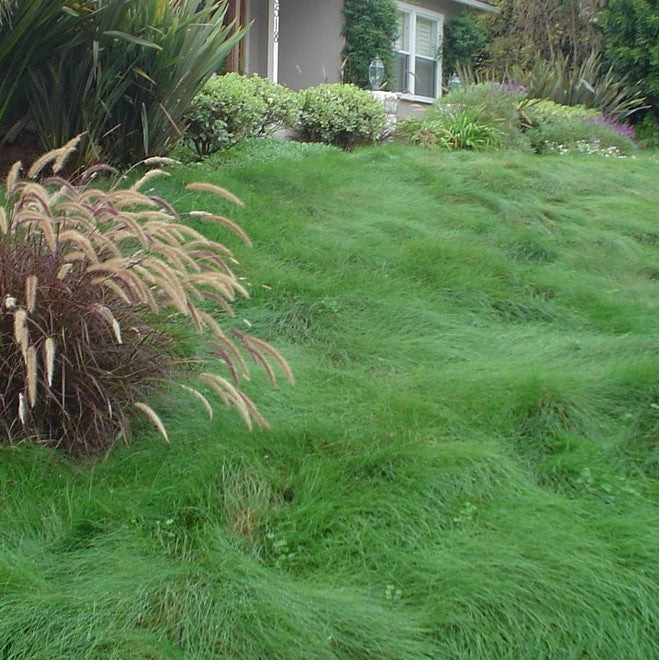
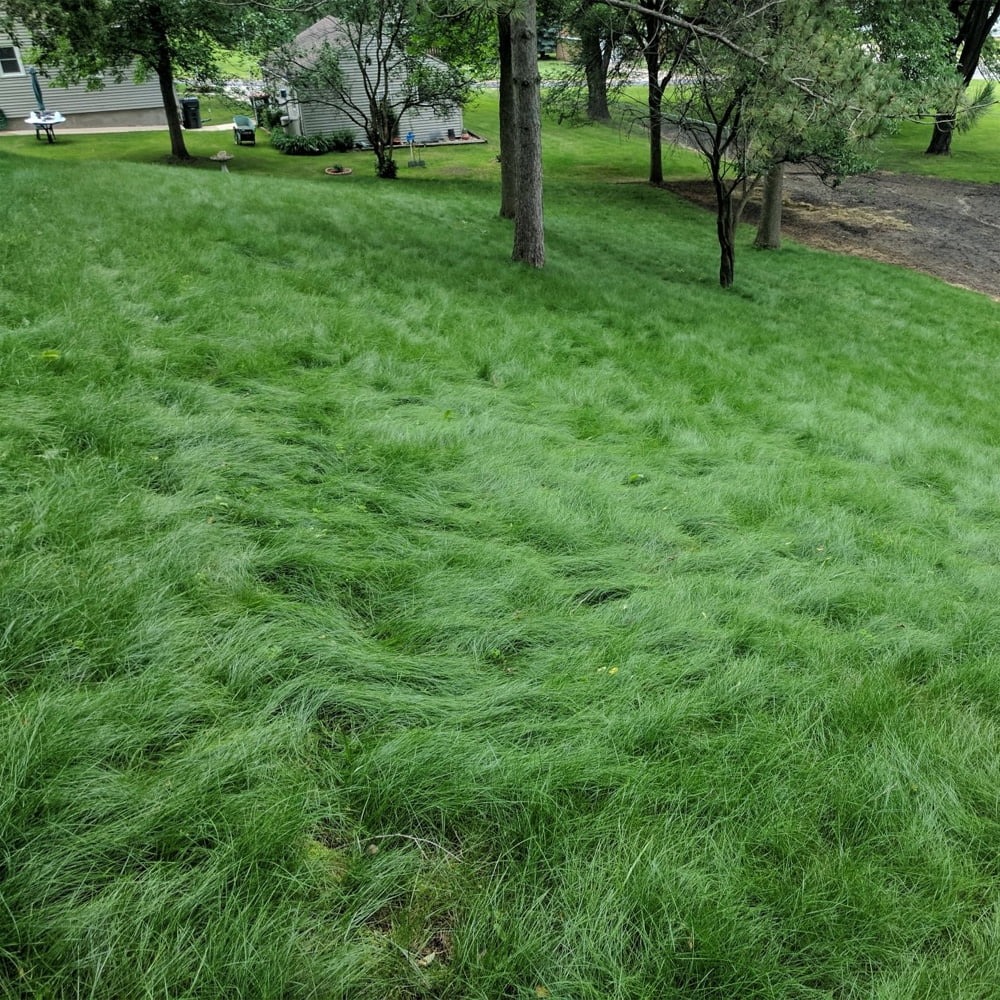
Fine fescue isn’t just one grass, it’s a group that includes:
- Creeping red fescue
- Chewings fescue
- Hard fescue
How to Identify It
- Very thin, hair-like blades
- Soft, wispy texture
- Performs well in shade
- Lower fertilizer needs
Why It’s Used in Blends
- Excellent shade tolerance
- Low-maintenance performance
- Handles poor soils well
Downsides
- Not ideal for heavy traffic
- Can look thin in full sun
If your lawn thrives in shade with very fine blades, fine fescue is likely present.
Most Lawns Are Blends
Here’s the reality most homeowners don’t realize:
Your lawn is probably not one grass.
It’s a mix, which is a good thing.
Blends exist because they provide:
- Faster germination
- Better drought resistance
- Improved shade performance
- Disease resilience
Monoculture lawns look great in theory, but blends perform better in real life.
How to Identify Your Grass at Home
You don’t need a lab test.
Here’s a simple DIY approach:
Step 1: Pull a Small Clump
Grab a section from the edge of your lawn.
Step 2: Look at Blade Width
- Thin = fine fescue or ryegrass
- Medium = bluegrass
- Wide = tall fescue
Step 3: Check the Leaf Tip
- Boat-shaped = Kentucky bluegrass
- Pointed = most others
Step 4: Flip the Blade
Shiny underside? Likely ryegrass.
Step 5: Look at Growth Pattern
- Spreading roots = bluegrass
- Bunching = ryegrass or fescue
You can also:
- Check old seed bags
- Ask your builder
- Contact your local extension office
Why Grass Type Actually Matters
Knowing your grass type affects everything:
Mowing Height
- Bluegrass: ~2.5–3.5 inches
- Tall fescue: ~3–4 inches
- Fine fescue: ~2.5–3 inches
Watering Needs
- Bluegrass = higher water demand
- Tall fescue = more drought tolerant
- Fine fescue = lower input
Fertilizing
- Bluegrass responds aggressively to nitrogen
- Fine fescue needs less fertilizer
Treat all grass the same and you’ll run into problems fast.
Best Grass Type for You?
We’ve got all our recommendations in our free guide “What Grass is Best for Me?” to point you to the best grass for you, your local environment, that pairs with your lifestyle.
Download “What Grass is Best for Me?”
Videos on Cool Season Grass:
If you’d rather see real examples side-by-side:
Watch Cool Season Grass Types
Where to Go Next
Now that you know what you’re working with, here’s where most homeowners go next:
- 👉 The 4 Core Lawn Care Fundamentals
- 👉 Best Grass Seed for Cool-Season Lawns
- 👉 How to Overseed Properly
- 👉 Lawn Care Calendar for Cool-Season Lawns
These will help you turn knowledge into results.
Final Thoughts
Understanding your grass type gives you clarity.
It helps you:
- Set the right mowing height
- Avoid overwatering
- Choose the right seed
- Fertilize smarter
You don’t need to become a turf scientist.
You just need a solid baseline.
Once you know what’s in your lawn, everything else gets easier.